
Last Updated: November 15, 2026
Quick Summary
Freshly roasted coffee beans are worth paying more for because roast date, not price or packaging, determines what you taste. Our coffees drink best one to five weeks after the roast date, and a bag without a roast date should be assumed old. Buying whole beans in a size you finish within that window keeps every cup consistent.
- Bean grade and defect count, processing method and roast freshness matter more than the label on the bag.
- Natural-process beans build body and fruit sweetness, while washed beans give cleaner acidity and clarity.
- A useful single origin label names the country, region or washing station, grade and process.
- Store beans airtight, away from light and heat at room temperature, and never in the fridge.
- A 500 g bag suits most households drinking a couple of coffees a day.
Table of Contents
- What Actually Separates Good Coffee Beans From Average Ones
- Single-Origin Coffee Beans: What You Gain and What You Give Up
- Coffee Beans for Espresso: Matching Roast and Recipe to Your Machine
- Why Freshly Roasted Coffee Beans Change What You Taste
- How to Store Coffee Beans So They Stay Consistent
- What a Bag Really Costs Per Cup
- Order Your Next Bag With a Roast Date on It
- Frequently Asked Questions
What Actually Separates Good Coffee Beans From Average Ones
Most specialty coffee beans are judged on a score sheet, not on how they perform in your grinder.
So what separates the good from the average? Three things matter more than the label on the bag: bean grade and defect count, processing method, and how recently it was roasted.
Grade matters because defects carry straight into the cup.
Processing is the second lever. Natural-process beans dry inside the fruit, which builds body and fruit sweetness.
The third lever is freshness, the one most buyers ignore, and where the money argument actually lives.
If you want to learn to judge bean quality yourself before paying a premium, our guide on how to identify specialty grade coffee beans walks through what to look for on the bag and in the cup.
Single-Origin Coffee Beans: What You Gain and What You Give Up
Single-origin coffee beans come from one country, region or farm, and they taste like that place. Blends combine several origins to hit a consistent flavour target.
What you gain with a single origin is character. Our Ethiopian single origin espresso, for example, is a grade 1 natural Guji Alaka with notes of cocoa, candy citrus, limoncello and apricots. You will not find that in a blend built for balance.
What you give up is consistency across bags. Crops change. A washed Kenyan from one harvest tastes different from the next. Blends exist precisely to smooth that out.
How to Read a Single Origin Label
A useful single origin label tells you four things: the country, the region or washing station, the grade, and the process. Anything less is decoration.
Look for a named mill or cooperative rather than just a country.
Watch out: A bag can say "single origin" while blending two farms from the same region. If traceability matters to you, buy from roasters who name the farm or washing station.
If you're ready to shop after weighing the trade-offs, our guide on buying single origin coffee beans covers what to prioritise.
Coffee Beans for Espresso: Matching Roast and Recipe to Your Machine
Coffee beans for espresso need enough development to extract evenly under pressure, and enough acidity to avoid tasting flat. A medium roast suits most home setups. Very light roasts demand more from your grinder and machine than most kitchens can deliver.
The recipe matters as much as the bean. Every coffee we sell comes with a starting espresso recipe: dose, yield, temperature and time. Start there, then adjust one variable at a time.
How We Assess Espresso Beans
Most buying guides rank beans by cupping score or the roaster's own tasting notes, how a bean performs in a lab, not in a home espresso machine. Our assessment is built around the variables a home barista can actually control: grind setting, dose, yield, temperature and time.
We evaluate each coffee on four criteria, scored from one to five:
- Dial-in forgiveness: how many grind adjustments it takes to reach a balanced shot. A forgiving bean lands within two or three steps; a demanding one needs finer control.
- Acidity balance: whether the acidity reads as bright and structured or sharp and distracting. We taste black, at the recipe on the bag, then again with 30 ml of full-cream milk.
- Body and texture: whether the shot has weight and coating mouthfeel, or runs thin and watery.
- Milk compatibility: whether the bean's character survives milk or disappears behind it.
Five Beans Compared: Flavour, Acidity and Brew Recipe
Here's how our current espresso range lines up. All are medium roast, all suit milk, and all drink best between one and five weeks post roast.
| Coffee | Price | Tasting Notes | Acidity | Espresso Recipe | Dial-in Forgiveness |
|---|---|---|---|---|---|
| Ethiopian Single Origin Espresso | $19.00 | Cocoa, candy citrus, limoncello, apricots | Medium | 20 g in, 33 g out, 92C, 28-31s | High |
| Kenyan Single Origin Espresso | $19.00 | White currants, honey, dark chocolate, mandarin | High | 20 g in, 34 g out, 92C, 26-29s | Medium |
| Mount Kenya Kiamaina Nyeri | $23.00 | Blackcurrant, red berries, blood orange, brown sugar | Medium | 20 g in, 35 g out, 92C, 26-29s | Medium |
| Brazil Joia Rara Farm | $29.00 | Dates, caramel, honey, citrus, tropical fruit | Medium | 20 g in, 31 g out, 92C, 28-31s | High |
| Out of Africa Blend | $23.00 | Dark chocolate, blood orange, apricot, almond, honey | Medium-high | 20 g in, 34 g out, 92C, 26-29s | High |
Price
Ethiopian Single Origin Espresso: Suitable with milk. Natural process, with flavour notes of cocoa, candy citrus, limoncello and apricots.
Kenyan Single Origin Espresso: Washed process with high acidity and tasting notes of white currants, honey, dark chocolate and mandarin.
Mount Kenya Kiamaina Nyeri: Washed process, with tasting notes of blackcurrant, dark and red berries, blood orange and brown sugar. Limited edition.
Brazil Joia Rara Farm: Natural, washed and pulped natural processing from the Cerrado Mineiro region, with a medium body.
Matching the Bean to Your Equipment
Your machine and grinder change which bean suits you. A bean that is forgiving on a commercial-style setup can be frustrating on a basic machine with a pressurised basket.
- Entry-level machine with pressurised basket: choose the Brazilian or the Out of Africa Blend. Both are forgiving and keep their body even when extraction is uneven.
- Mid-range machine with a non-pressurised basket and burr grinder: the Ethiopian and the Kenyan are both accessible. Start with the Ethiopian if you drink milk; the Kenyan if you drink black.
- Manual lever or high-end setup: the Mount Kenya Kiamaina Nyeri rewards finer control. Its washed process gives clarity that shows up when you can hold the recipe steady.
Watch out: a very light roast can stall a basic machine and taste sour no matter how you adjust the grind. If your equipment is entry-level, stay with medium roasts and forgiving beans.
If you want to browse espresso-suited single origins to match your machine, our single origin espresso range is the place to start.
Why Freshly Roasted Coffee Beans Change What You Taste
Freshly roasted coffee beans release carbon dioxide for days after roasting. That gas interferes with extraction. Too fresh and your shots run fast and taste sharp; too old and the beans go flat and papery.
This is why roast date beats almost every other signal on a bag. A "best before" date tells you nothing useful. A roast date tells you exactly where the bean sits on its curve.
Our own coffees drink best one to five weeks after the roast date.
What Happens to Beans After Roasting
The change is not random. It follows a predictable pattern:
- Weeks 1-5: the optimal drinking window for our coffees, per the roast date.
After five weeks, flavour flattens gradually rather than spoiling outright.
How to Assess Freshness Before You Buy
You cannot smell a bag through a website, so use these signals:
-
Roast date on the bag: the single most useful piece of information. If it is missing, assume the coffee is old.
-
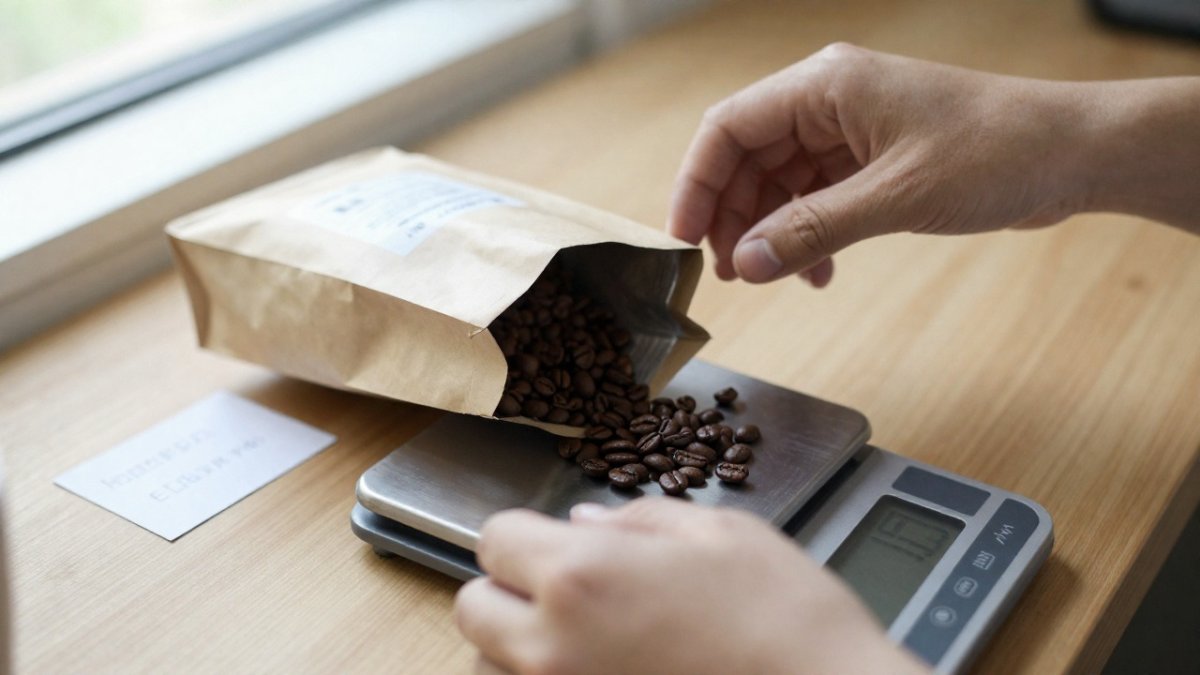
Whole beans rather than ground: whole beans stay fresh far longer because the surface area exposed to oxygen is much smaller.
Watch out: if you can't find a roast date on a bag, assume the coffee may be old.
How to Store Beans to Preserve Flavour
Storage is the other half of freshness. The enemies are oxygen, light, heat and moisture.
- Keep beans in an airtight container away from light and heat, at room temperature. A cupboard is better than a benchtop next to the kettle.
- Do not store in the fridge. Moisture and temperature swings degrade beans faster than room temperature does.
- Freeze only for long-term storage. A sealed bag can be frozen for several months. Let it come to room temperature before opening to avoid condensation.
- Grind immediately before brewing. Whole beans stay fresher longer than ground. This single habit does more for consistency than any storage gadget.
- Buy a size you will finish within the drinking window. A 500 g bag suits most households drinking a couple of coffees a day; a 1 kg bag only makes sense if you're brewing for a crowd or moving through it fast.
If your shots vary day to day as the bag ages, our piece on why your espresso tastes different every day explains the fix.
How to Store Coffee Beans So They Stay Consistent
Buy in a size you'll finish within the drinking window. A 500 g bag suits most households drinking a couple of coffees a day; a 1 kg bag only makes sense if you're brewing for a crowd or moving through it fast.
What a Bag Really Costs Per Cup
Value in coffee is best measured per cup, not per bag. A $29 bag that gives you 25 doses costs more per cup than a $19 bag that gives you 20. Do the division before you decide.
Take our Ethiopian at $19.00. The difference per cup between our coffees is a matter of price per bag; the difference in what you taste depends on the bean.
That reframes the "is it worth paying more" question.
Order Your Next Bag With a Roast Date on It
Freshness is the one variable you can actually control, and it starts with who you buy from. You can order Coffee Prototypers whole bean as a stand-alone purchase for the next roast. Garage Roasters is a family-owned business established in 2015.
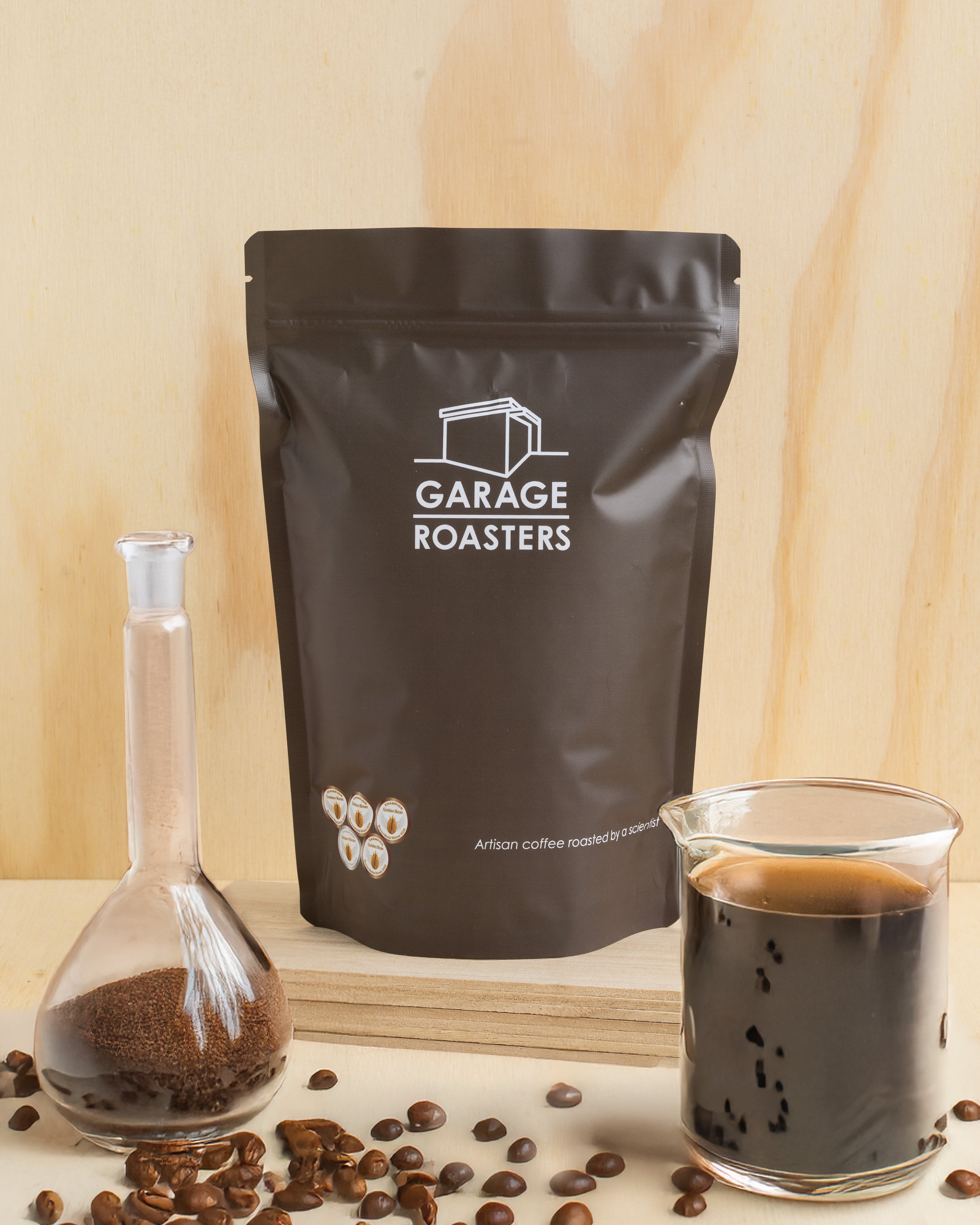
The real test isn't the bag or the price tag. It's whether the coffee tastes the same on Tuesday as it did on Saturday. That comes down to roast date, a repeatable recipe, and a roaster who controls both. Garage Roasters publishes a starting espresso recipe with every coffee, roasts in small batches with a clear roast date, and packs in fully compostable bags.
Frequently Asked Questions
How do I choose good coffee beans?
Start with the roast date, not the best-before date. Coffee peaks roughly one to five weeks after roasting, so a bag stamped with a recent date tells you more than any flavour claim on the front. Then match the roast to your brew method: medium roasts suit espresso and milk drinks, while lighter roasts show more acidity in filter. Finally, check the processing method, because natural and washed lots of the same origin taste quite different.
What is the difference between single-origin coffee and a blend?
Single-origin coffee beans come from one farm, cooperative or region, so the cup reflects that place and processing method. Blends combine several lots, chosen so the components balance each other. A blend like Out of Africa pairs grade 1 African beans for intensity with brightness from different processing methods. Single origins give you a clearer, more variable flavour; blends give you a repeatable profile across bags.
Which coffee beans are best for espresso?
Look for beans roasted specifically for espresso and a published brew recipe you can start from. Garage Roasters lists a dose, yield, temperature and time window for each espresso lot, for example 20 g in, 33 g out at 92C over 28 to 31 seconds for the Ethiopian. Beans with medium body and moderate acidity, such as the Brazil Joia Rara, suit milk drinks, while higher-acidity Kenyans suit drinkers who want sparkle.
How long do coffee beans stay fresh after roasting?
Most roasted coffee beans drink best between one and five weeks after the roast date, which is the window Garage Roasters prints on its lots. Flavour flattens gradually after that rather than spoiling outright. Buy in quantities you will finish inside that window, keep the bag sealed and store it away from light and heat.
