

Last Updated: October 30, 2026
Quick Summary
Your espresso can taste different each day because small shifts in dose, grind, water temperature, bean freshness and machine stability all change how much flavour a shot extracts. To make espresso taste different less often, measure your dose, yield and shot time, change only one variable at a time, and log every shot.
- Weigh your dose and yield to 0.1 g and time every shot.
- A common starting point is 18 to 20 g in and about 36 g out, in roughly 28 to 32 seconds.
- Give the machine 15 to 20 minutes to stabilise before pulling shots.
- Shots under about 25 seconds often taste sour; go finer in small steps.
- Shots over about 35 seconds often taste bitter; go coarser by one small step.
Table of Contents
- Why Your Espresso Changes From One Morning to the Next
- Start With a Measured Baseline: Dose, Yield and Time
- How to Make Espresso Taste Consistent Across Days
- Espresso Tastes Sour? Under-Extraction Explained
- Espresso Tastes Bitter? Over-Extraction Explained
- Espresso Grind Size Adjustment, Step by Step
- Build a Shot Log and Lock In Your Next Brew
- Frequently Asked Questions
Your espresso tasted great on Tuesday and sour on Thursday, with the same beans and the same machine, which is why an espresso taste different from one day to the next. The honest answer is that small changes in dose, grind, water and timing all move the flavour of a shot. The good news is that you can find the cause and fix it with a simple routine. This guide shows you how.
Why Your Espresso Changes From One Morning to the Next
Espresso is a very sensitive brew. Water passes through a tightly packed puck of coffee in about 25 to 30 seconds, so a small shift in any variable changes how much flavour gets pulled out.
The usual suspects are grind size, dose, water temperature, bean freshness and how clean your equipment is, since any of these can make espresso taste different even when the recipe stays the same.
Switching beans and grind setting on the same morning makes it hard to know which change caused the difference.
Start With a Measured Baseline: Dose, Yield and Time
Before you touch the grinder, measure everything. A shot is only repeatable if you can describe it with numbers.
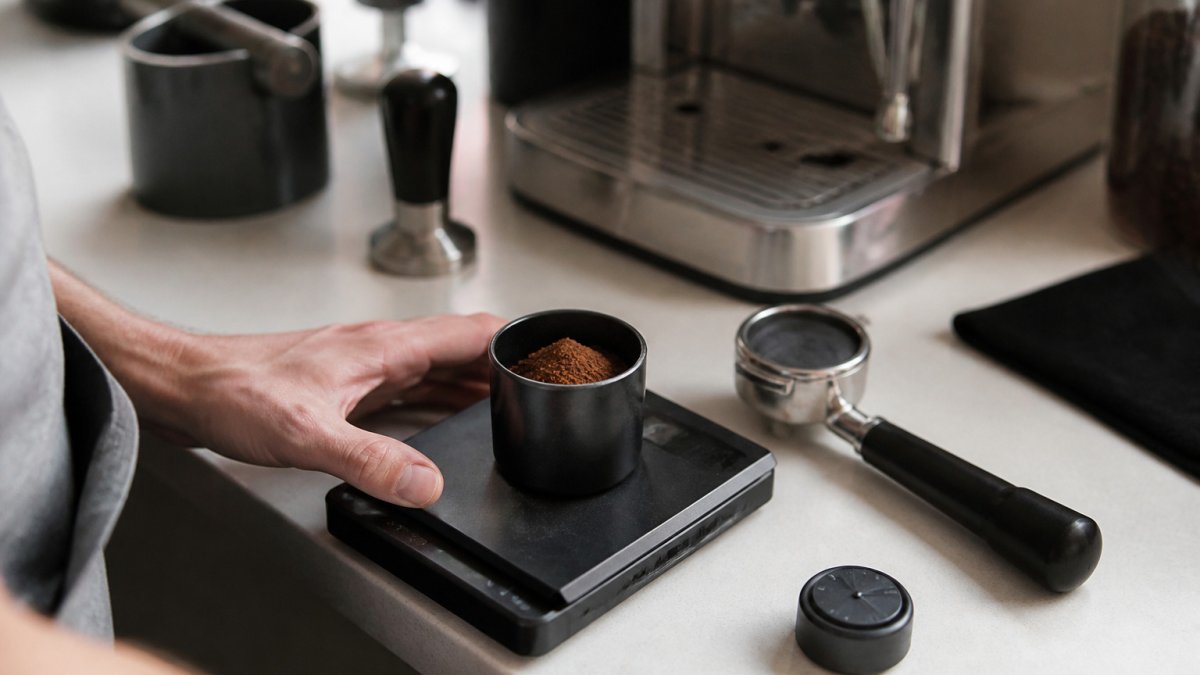
- Weigh your coffee dose in grams with a scale that reads to 0.1 g. Our step-by-step home espresso dial-in guide covers this baseline in more detail.
- Weigh the liquid espresso that comes out, called the yield.
- Time the shot from the first drip to the moment you stop it.
A common starting point is 18 to 20 g in and about 36 g out, in roughly 28 to 32 seconds. Your roast may suit a different ratio, so check the brew recipe on the bag. Write these three numbers down every time. Once you know your baseline, you can see whether a bad shot came from a different dose, a different yield or a different time.
Measuring three numbers on every shot makes it clear which change caused a shift in taste.
| Step | What to do | Time or frequency |
|---|---|---|
| Weigh dose | Weigh coffee in grams with a 0.1 g scale | Every shot |
| Weigh yield | Weigh the liquid espresso that comes out | Every shot |
| Time the shot | Time from first drip to stopping | Every shot |
| Starting recipe | About 18 to 20 g in, about 36 g out | Roughly 28 to 32 seconds |
| Record numbers | Write down dose, yield and time | Every time |
How to Make Espresso Taste Consistent Across Days
Consistency comes from repeating the same steps in the same order, but the reason most home baristas still get variation is that they change several things at once and then cannot tell which one mattered. A consistent espresso extraction guide walks through this routine step by step. Treat your morning routine as a controlled experiment: change one variable, keep everything else fixed, and record the result.
Start with the variables you control directly:
- Dose the same weight every time, using the same basket. A 0.5 g drift is enough to shift shot time noticeably.
- Level and tamp the same way each morning. Consistency of pressure matters more than the exact number.
- Run a short flush before pulling the shot so the group head reaches a stable temperature. A machine that has only just switched on is still warming up, and the first shot of the day is often cooler than the second.
- Keep the grinder and portafilter clean. Stale oils and old grounds trapped in the chute change the taste and can make the first shot after a clean taste different from the shots that follow.
- Use beans within their optimal window and note the roast date rather than relying on a best-before date.
Then account for the variables you do not control directly:
- Humidity and room temperature. Coffee absorbs moisture from the air. On a humid day the same grind setting can flow slower; on a cold, dry morning it can run faster. If your shots swing with the weather, adjust grind by one small step rather than changing dose.
- Grinder retention. A grinder holds a few grams of ground coffee from the previous dose. If you switch beans or grind settings, the first shot contains a mix of old and new grounds. Purge a few grams after any change before you judge the result.
- Warm-up time. Give the machine 15 to 20 minutes to stabilise, not just until the ready light comes on. Temperature stability affects extraction more than most people expect.
- Machine stability. A machine that has not been descaled or backflushed can run hot or unevenly. Follow the manufacturer's cleaning schedule and note in your log when you last did it.
Small habits matter more than expensive gear. If your routine is the same each day and you change only one variable at a time, your espresso will be too, and when it is not, you will know where to look.
Espresso Tastes Sour? Under-Extraction Explained
Sour, sharp or thin espresso usually means the shot is under-extracted. Water has not pulled enough of the sweeter, rounder compounds from the coffee. Adjusting these variables systematically is the most reliable way to dial in espresso shots and achieve a balanced, flavorful extraction every time.
Fellow Opus 2 Conical Burr Grinder - Black →
A common mistake is blaming the beans when the real cause is a grind that is too coarse for the day's conditions. Check your shot time first. If it is under about 25 seconds, try a finer grind in small steps.
Espresso Tastes Bitter? Over-Extraction Explained
Bitter, dry or harsh espresso is the opposite problem. Too much is extracted, often because the grind is too fine, the shot runs too long, or the water is too hot.
If your shot takes more than about 35 seconds, go coarser by one small step. Then pull another shot and compare. Also check that your machine's temperature is stable, since a few degrees can shift the flavour noticeably. Bitterness that appears only on some days often points to a machine that has not fully warmed up.
Espresso Grind Size Adjustment, Step by Step
Grind size is the most powerful control you have, and it is also the one people change too often. Adjust it carefully.
- Start from your last good shot and note the grind setting.
- Change the grind by one small step only.
- Pull a shot using your baseline dose and yield.
- Compare the shot time and taste against your log.
- Keep the change if it improves the shot. Revert if it does not.
Burr grinders with stepless dials, like the Fellow Opus 2 or the Turin DF54, make these small changes easier to repeat. If you are unsure whether a basic machine can brew specialty coffee, that article covers what to expect. Being able to return to an exact setting is what makes a log useful.
Build a Shot Log and Lock In Your Next Brew
A shot log turns guesswork into a record you can use. Keep a simple notebook or spreadsheet with these columns:
- Date and time
- Bean name and days since roast
- Grind setting
- Dose in grams
- Yield in grams
- Shot time in seconds
- Water temperature, if your machine displays it
- Taste notes and a rating out of five
- Anything unusual: new bag, cleaned the grinder, humid day, skipped the flush
How to read the log like a decision tree
A log is only useful if you know what to do with it. Use this order of checks when a shot tastes wrong:
- Did dose, yield or time change? If yes, fix that first. A different yield or shot time explains most taste shifts on its own.
- Did the bean age? Compare days since roast. If the bag is more than a week older than your last good shot, expect the grind to need a small adjustment.
- Did the grind setting move? If not, and dose and time are unchanged, the cause is likely puck preparation, channelling or machine temperature.
- Did anything environmental change? A humid day, a cold kitchen or a machine that was switched on late are common culprits.
- Only then change the grind, by one small step, and log the result.
This sequence stops the most common mistake: grinding finer to fix a sour shot that was actually caused by a low dose or a cold machine.
Separate brewing changes from perception
Not every difference you taste is a different extraction. Palate adaptation, sleep, hydration, and even what you ate or drank before the shot all change how you perceive flavour. A coffee that tastes sweeter in the afternoon may be the same shot you pulled at 7 a.m.
To tell the two apart, taste under consistent conditions:
- Taste the shot at roughly the same time each day, before eating anything strongly flavoured.
- Slurp a little cool water before tasting to reset your palate.
- If a shot tastes different, pull a second shot from the same dose and grind before you adjust anything. If the second shot tastes normal, the first was an outlier, often channelling or temperature.
- Note your own state in the log: tired, dehydrated, or just after a strong coffee. Patterns will emerge.
Once your recipe is locked in, your espresso should taste the same most mornings. If you want a head start, our Ethiopian Single Origin Espresso lists a brew recipe of 20 g dose, 33 g yield, 92C and 28 to 31 seconds. Ready to try it? Buy roasted coffee from Garage Roasters and start your log this week.
Frequently Asked Questions
Why does my espresso taste different every day even when I use the same beans?
Beans can stay the same while the shot changes. Small shifts in grind size, dose, water temperature, puck preparation and bean age all alter extraction. Because espresso is so sensitive, a change of a fraction of a gram or a few seconds in shot time can move flavour from sour to balanced to bitter. Weigh your dose and yield, time each shot, and change only one variable at a time so you can see what is actually causing the difference.
How do I make espresso taste consistent every day?
Start by recording your recipe: dose in grams, yield in grams and shot time in seconds. Keep water temperature and grind setting logged too. Check your grinder and portafilter for old grounds before each session, and use beans within their optimal drinking window, which varies by bean. When a shot drifts, adjust grind first and only then the other variables.
Does grind size really change how espresso tastes?
Yes. A finer grind slows water flow and increases extraction, which tends to make espresso richer but can push it toward bitterness if it goes too far. A coarser grind speeds the shot and can leave it sour or thin. Grind adjustments are the most effective lever for taste, so make them in small steps, such as one notch at a time on a stepless dial like the Fellow Opus 2 or Turin DF54 V4.
Can freshly opened beans change how espresso tastes over a few weeks?
Yes. Coffee changes as it ages after roasting, so the same grind and recipe can taste brighter or flatter from week to week. Most espresso is best within a set window after roast date, so note the roast date on each bag and track when you open it. If shots start tasting different across a bag, the beans and your dial-in should be reviewed together rather than assuming the machine has changed.
