
Table of Contents
- How to Choose Compostable Coffee Beans in 2026
- Compostable Coffee Bags: What to Look For
- Home Compostable Coffee Packaging: Is It Right for You?
- Compostable vs Biodegradable Packaging: Key Differences
- How to Dispose of Compostable Coffee Bags
- Freshness, Value and Like-for-Like Comparison
- Common Mistakes to Avoid When Buying Compostable Coffee
- Conclusion: Making a Confident Choice
- Frequently Asked Questions
Last Updated: October 17, 2026
How to Choose Compostable Coffee Beans in 2026
Finding the best compostable coffee beans in Australia starts with one question most buyers never ask: is the bag actually certified, or does it just say "eco-friendly"? At Garage Roasters, we've watched the gap between real compostability and green marketing grow.
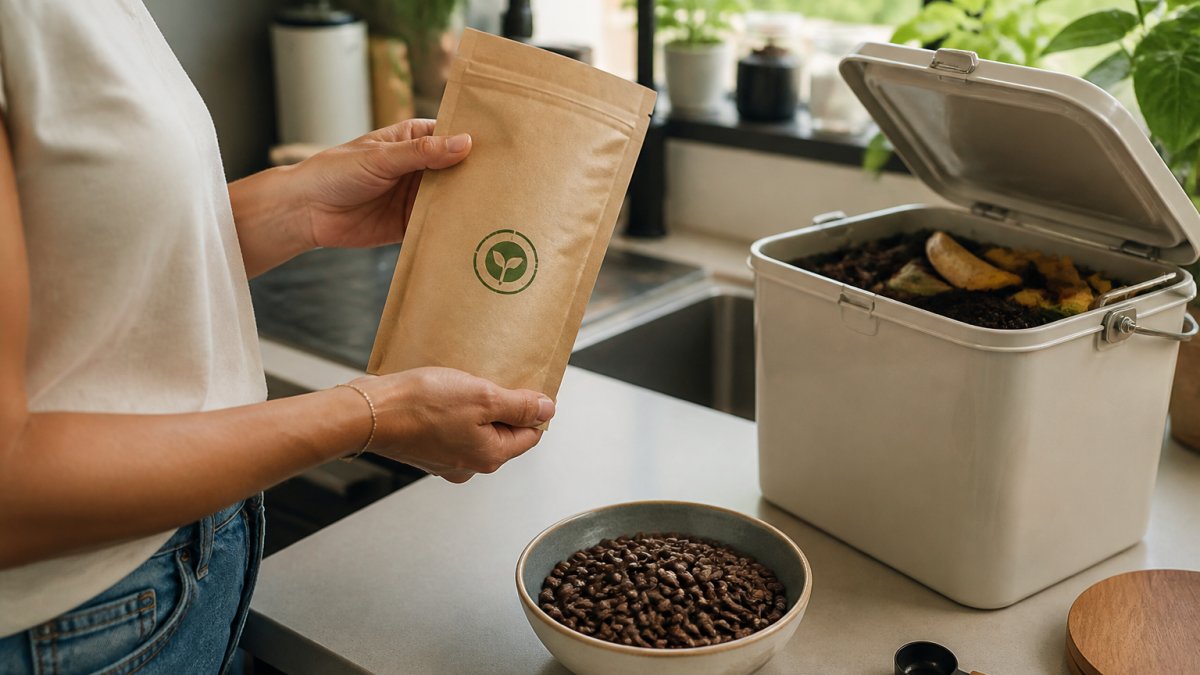
Two things decide whether a bag earns its place in your kitchen: freshness, because no packaging claim rescues stale coffee, and whether the packaging carries a recognised certification.
Roast Date and Freshness: The First Thing to Check
A roast date is the single most useful piece of information on any coffee bag. It tells you when the beans were roasted, not when they were packed or when they expire.
Most supermarket bags print a best-before date instead, which tells you almost nothing, it can stretch 12 months past a roast the beans never recovered from.
If a roaster won't tell you the roast date before you buy, that's your answer.
Origin, Roast Profile and Flavour
Origin and roast profile shape flavour more than any packaging decision ever will. A light-roasted Ethiopian single origin tastes floral and bright; a darker Colombian blend leans chocolatey and round.
Ask what you actually drink. For daily espresso, a medium roast with some body is more forgiving; for filter, lighter roasts let the origin character through. Compostable packaging is a bonus on top of good coffee, never a substitute for it.
Compostable Coffee Bags: What to Look For
Compostable coffee bags break down into organic matter under defined conditions, either at home or in an industrial facility. The key word is "defined": a bag labelled compostable should state which conditions it needs and carry a certification proving it meets them.
Look for three things on any compostable coffee bags you're considering:
- A certification logo, not just the word "compostable"
- A clear statement of home or commercial composting
- A materials list naming the plant-based components
Bags that say "degradable" or "eco-friendly" without a certification are the ones to leave on the shelf. Degradable plastic fragments rather than breaking down, and carries no composting standard behind it.
Certification Markings That Matter
In Australia, look for the seedling logo from the Australasian Bioplastics Association, which certifies products against AS 4736 (commercial composting) and AS 5810 (home composting).
Organic claims work the same way. Australian Certified Organic is the domestic certification body, and beans carrying that mark have been grown and handled to a defined standard, separate from whether the packaging composts.
Australasian Bioplastics Association certification scheme publishes the current standards and a searchable list of certified products, which is worth checking before you trust a logo you don't recognise.
Home Compostable Coffee Packaging: Is It Right for You?
Home compostable coffee packaging suits anyone with a working compost bin, worm farm or garden system who wants the bag to break down on site.
It's not right for everyone. In an apartment with no garden and no compost service, a home compostable bag sits in general waste and behaves like any other bag.
The honest test is simple. Where will this bag physically end up? Answer that before you pay a premium for compostability.
Compostable vs Biodegradable Packaging: Key Differences
Compostable and biodegradable packaging are not interchangeable, and treating them as synonyms is the most common mistake in this category.
Biodegradable means only that the material will eventually break down through biological action, no timeframe, no required end product, no test standard.
Purchase Garage Roasters coffee here! →
| Claim | What it means | Certified | Best for |
|---|---|---|---|
| Home compostable | Breaks down in a home compost system to a defined standard | Yes, AS 5810 | Households with a compost bin or worm farm |
| Commercially compostable | Breaks down in an industrial facility to a defined standard | Yes, AS 4736 | Areas with a commercial organics collection |
| Biodegradable | Will break down eventually, no timeframe or end product defined | No | No clear disposal pathway |
| Recyclable | Can be processed through a recycling stream | Varies by council | Where soft plastics collection exists |
For coffee buyers, the practical takeaway is to ignore "biodegradable" as a purchase signal and look for the certification instead.
How to Dispose of Compostable Coffee Bags
Disposing of compostable coffee bags correctly depends on which certification the bag carries and what your local waste system accepts. Work out where the bag will physically end up before you buy, because compostability only delivers its benefit when the bag reaches a compost system.
Step 1: Read the certification, not the word
- AS 5810 (home compostable), the bag is tested to break down in a home compost system at ambient temperatures. It can go in a home compost bin or worm farm.
- AS 4736 (commercially compostable), the bag needs the higher, sustained temperatures of an industrial facility. It belongs in a council organics collection or a commercial compost drop-off, not a backyard bin.
- No seedling logo, treat it as general waste unless the bag states otherwise. "Degradable" and "biodegradable" carry no composting standard and no disposal pathway you can rely on.
Step 2: Match the bag to your actual bin system
- Home compost bin or worm farm, a home compostable bag can go in, torn into smaller pieces to speed breakdown. Remove any tin tie, one-way valve or label that is not itself compostable first.
- Council organics (FOGO) collection, check your council's waste guide before adding any bag. Some councils accept certified compostable packaging in FOGO; others explicitly exclude it. The bag's certification does not override the council's rule.
- Commercial compost drop-off, some councils and private operators run drop-off points for certified compostable packaging. This is the right pathway for a commercially compostable bag if you have no kerbside organics service.
Step 3: Prepare the bag properly
- Remove any tin tie, valve or label that is not compostable.
- Tear or cut the bag into smaller sections before adding it to a compost system.
- Keep the bag out of the recycling bin, where compostable film contaminates the stream.
Australasian Bioplastics Association certification scheme publishes the current standards and a searchable list of certified products, so you can confirm which standard a bag claims before you decide where it goes.
Australian Government guidance on recycling and waste sets out how organic waste streams are managed nationally, and your local council's waste guide is the final word on what goes in which bin.
Freshness, Value and Like-for-Like Comparison
Comparing compostable coffee on value means comparing like with like: price per kilogram, roast date, origin and certification, all at once. A bag that looks cheap per gram often loses on freshness, and a premium bag with a stale roast date is poor value regardless of packaging. Here's how to run the comparison yourself.
The four measures, with the arithmetic shown
- Price per kilogram, not per bag. Divide the pack price by the pack weight in kilograms. A 1 kg bag at $60 is $60/kg; a 250 g bag at $18 is $72/kg. The smaller bag can look cheaper on the shelf and cost 20% more per cup, so always convert to a common unit.
- Cost per 250 g, because most home brewers think in 250 g lots. A $60/kg bag is $15 per 250 g; a $72/kg bag is $18 per 250 g. Hold that $3 difference in your head when shipping pushes the total up.
- Roast date, ideally within the last fortnight. A bag roasted three months ago is no bargain at any price. Ask for the roast date of the batch you'd actually receive, not the website's hero image.
Shipping and the true landed cost
Shipping changes the ranking. A $10 flat rate on a $60/kg bag makes the landed cost $70/kg; a roaster with free shipping over a threshold can beat that on a larger order even at a higher sticker price. Work out landed cost per kilogram including shipping, then compare. Two patterns are common:
- Free-shipping thresholds reward buying 1 kg or more at once, which also suits anyone who drinks daily and can store beans well.
- Flat-rate shipping penalises small orders, so a 250 g trial bag can carry a disproportionate share of the freight cost.
If you are testing a new roaster, order the smallest pack that clears any free-shipping threshold, note the roast date on arrival, and only then commit to a larger bag.
A worked comparison you can copy
Set up a four-column note: roaster, price per kilogram (including shipping), roast date of the batch, and certification (coffee and packaging). Fill it in for three or four roasters before you buy. The roaster that answers all four quickly and clearly is usually tracking freshness and certification properly, a better signal than any single price point.
Common Mistakes to Avoid When Buying Compostable Coffee
The first mistake is trusting the word "compostable" without a certification logo behind it. The second is buying on packaging alone and ignoring the roast date, which matters more to what's in your cup than any bag material.
Three more worth flagging:
- Assuming compostable means recyclable, then putting the bag in the wrong bin
- Buying a home compostable bag with no home compost system to put it in
- Treating "biodegradable" as a stronger claim than compostable, when it's a weaker one
A common mistake is judging a roaster by the bag and never asking about the coffee. Origin, roast profile and freshness decide whether you enjoy the brew; packaging decides what happens to the waste.
Conclusion: Making a Confident Choice
The best compostable coffee beans in Australia pass all four checks: a recent roast date, an origin and roast profile you enjoy, recognised certification on the coffee, and packaging certified to a standard your bin system can handle. Skip any one and the purchase underdelivers, in the cup or in the waste stream.
At Garage Roasters, we roast top-grade African and Colombian single origins using a methodical, research-based process, and we pack every order in fully compostable packaging. If you want coffee that holds its flavour batch to batch and a bag you can genuinely compost, buy roasted coffee from Garage Roasters and check the roast date on arrival.
Frequently Asked Questions
Are compostable coffee bags actually compostable?
Only if they carry a recognised certification such as AS 5810 (home compostable) or AS 4736 (commercial compostable). Without a certification mark, the bag may only be biodegradable, which does not guarantee it will break down in a home compost bin. Check the packaging for a logo and a certification number. If neither is present, treat the bag as general waste rather than compost.
Can compostable coffee packaging go in a home compost bin?
Yes, but only if it is labelled home compostable (AS 5810). Commercially compostable bags (AS 4736) need the higher temperatures of an industrial facility and will not break down reliably in a backyard bin. For home composting, tear the bag into smaller pieces, mix it with brown waste, and keep the pile aerated. Expect it to take several months, depending on conditions.
How long does compostable coffee packaging take to break down?
Home compostable packaging typically breaks down within 6 to 12 months in a well-managed compost heap. Commercially compostable packaging breaks down faster in an industrial facility, often within 12 weeks. Actual times depend on moisture, temperature, and the mix of materials in the pile. Turning the compost regularly and keeping it as warm as possible will speed up the process.
What is the difference between compostable and biodegradable coffee packaging?
Compostable packaging must break down within a set timeframe and leave no toxic residue, verified by a standard such as AS 5810 or AS 4736. Biodegradable packaging only means it will eventually break down, with no time limit or guarantee about what it leaves behind. For a home compost bin, choose certified home compostable bags. Biodegradable bags often belong in general waste.