
Table of Contents
- What Makes a Coffee Bean Suitable for Home Espresso
- Single Origin vs Blend for Espresso: Which Should You Choose?
- How to Dial In Espresso Beans Without Daily Adjustments
- Roast Levels, Freshness, and Flavour Profiles for Home Espresso
- Coffee Bean Storage Tips for Freshness That Lasts
- Troubleshooting Extraction Issues in Your Home Setup
- Frequently Asked Questions
Last Updated: September 27, 2026
What Makes a Coffee Bean Suitable for Home Espresso
The best coffee beans for home espresso are freshly roasted, medium to medium-dark, with enough sweetness and body to hold up under pressure. Forgiving beans matter more than fancy ones at home.
- Freshness with a rest period. Beans need time to degas after roasting before they extract predictably.
- Roast development. A bean roasted too light for espresso tastes sour and thin; too dark and it turns ashy.
- Solubility. Some beans dissolve evenly and predictably; others channel and gush no matter what you do.
Single Origin vs Blend for Espresso: Which Should You Choose?
Blends are the safer choice for most home setups because they balance sweetness, body, and acidity into a predictable shot. Single origins offer more distinctive flavour but demand tighter control of grind and dose.
When a Blend Works Better for Home Espresso
A blend combines origins to hit a target flavour profile, a chocolatey Brazilian base with a bright Ethiopian for lift, say. The point is balance and repeatability, and for home baristas blends are forgiving: if your grind drifts or your tamp isn't perfect, a well-built blend still produces a drinkable shot. That's why most cafes run blends as their house espresso.
When Single Origin Shines in the Cup
Single origin espresso is one bean, one place, one harvest, so you taste the terroir: a washed Ethiopian might give jasmine and citrus; a natural Colombian, berry and cocoa. The trade-off is less forgiveness, high acidity turns sharp if you under-extract, and delicate florals vanish if the temperature runs high. If you enjoy tinkering, that's the appeal; if you want the same great shot every morning, a blend or a stability-built single origin is smarter.
| Factor | Espresso Blend | Single Origin |
|---|---|---|
| Consistency | High, forgiving | Varies by bean |
| Flavour | Balanced, layered | Distinctive, terroir-driven |
| Best for | Daily repeatable shots | Exploring flavour |
| Dial-in effort | Lower | Higher |
How to Dial In Espresso Beans Without Daily Adjustments
You dial in espresso beans by fixing dose, yield, and grind once, then correcting only when the coffee actually changes. The trick is beans stable enough that those changes are rare, lock down your variables and let the bean do the work.
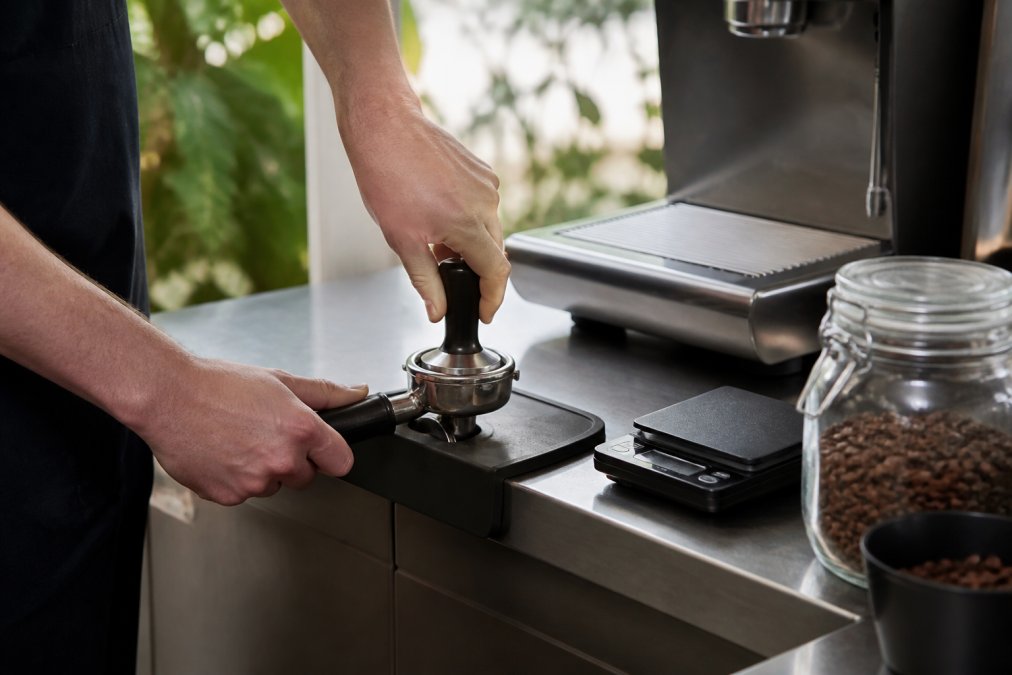
Here's a repeatable method:
- Fix your dose. Weigh the dry coffee in the basket. Pick one number and stay there.
- Fix your yield. Weigh the liquid espresso out. Aim for a consistent ratio, roughly 1:2 coffee to water by weight as a starting point.
- Set your grind once. Adjust until the shot runs in a sensible time, then leave it alone.
- Taste, then correct one variable. Sour means under-extracted; bitter means over-extracted. Change grind, not everything at once.
- Track your roast date. As beans age, they need a finer grind. Expect small shifts over the first two weeks, then stability.
Roast Levels, Freshness, and Flavour Profiles for Home Espresso
Medium and medium-dark roasts suit home espresso best because they balance sweetness, body, and acidity. Light roasts can work but demand precise technique; dark roasts extract easily but lose nuance. A medium roast keeps enough acidity to taste lively while developing caramel and chocolate sugars; a dark roast pushes those further, giving smoke, bitterness, and heavier body.
Coffee Bean Storage Tips for Freshness That Lasts
Store coffee beans in an airtight, opaque container away from heat and moisture, and use them within roughly two to four weeks of the roast date for espresso. The enemies are oxygen, light, heat, and humidity, but for espresso the key mechanism is carbon dioxide. Freshly roasted beans hold a reservoir of CO2 in the cell structure, why a bag puffs up, why a one-way valve exists, and why a day-two shot can gush and taste sharp no matter how carefully you dial in.
What each storage variable actually does
- Oxygen oxidises aroma oils, producing the flat, papery, cardboard note of stale coffee. A sealed bag with the air squeezed out slows this dramatically.
- Light accelerates oxidation of those oils; a clear jar on a sunny bench is worse than the opaque bag the beans arrived in.
- Heat drives off volatile aromatics and speeds degassing; skip the cupboard above the kettle or oven.
- Moisture catches people out. Coffee is hygroscopic, it absorbs airborne water, clumping the grind and producing uneven, channelled shots.
The fridge and freezer question
The fridge is the wrong tool: every door opening brings warm humid air to cold beans, condensation forms, and the bean absorbs both that moisture and whatever else is in there, curry, cut onion, blue cheese. For espresso, where flaws are magnified, that's a real problem. The freezer is different, but only used properly: it slows oxidation and degassing, genuinely extending the life of beans you won't finish in a few weeks. The rules:
- Portion before freezing. Divide into amounts you'll use in about a week so you only thaw what you need.
- Seal hard. Vacuum seal or use a genuinely airtight container; freezer burn is oxidation by another name.
- Thaw fully, sealed, before grinding. Let the portion come to room temperature still sealed so condensation forms on the container, not the beans.
- Never refreeze. Each thaw-and-refreeze cycle pushes moisture in and drives aromatics out.
A practical home routine
Storage is where money quietly leaks away: a good bean stored badly tastes worse than a cheaper bean stored well, and for espresso the penalty shows up as inconsistency, not just dull flavour.
Troubleshooting Extraction Issues in Your Home Setup
Most home espresso problems trace back to grind, dose, freshness, or water, not the machine. The useful skill is reading the shot and knowing which variable to touch first, so here are symptoms linked to the bean characteristics that cause them.
Read the shot before you change anything
| Symptom | Likely cause | First fix | Bean characteristic that drives it |
|---|---|---|---|
| Sour, thin, sharp | Under-extracted | Grind finer | Light roasts and high-acid single origins extract less readily |
| Bitter, harsh, drying | Over-extracted | Grind coarser or drop temp slightly | Dark roasts and low-acid beans give up solubles fast |
| Gushing, fast, pale | Too fresh or too coarse | Rest the beans, then grind finer | Beans under about five days post-roast still hold heavy CO2 |
| Choking, no flow | Too fine, or stale and compacting | Grind coarser, check roast date | Very old beans fracture into fines that block the basket |
| Uneven, channelled flow | Poor distribution | Level and tamp evenly | Clumpy grinds from static-prone beans channel badly |
| Dull, flat, metallic | Water chemistry | Adjust water minerals | Very soft water under-extracts; very hard water mutes flavour |
Why the bean, not just the grind, causes the symptom
A sour shot is usually called a grind problem, and often it is, but a light-roasted, high-altitude washed single origin is denser and less soluble, needing a finer grind and often a longer ratio to taste sweet. The same setting on a medium-dark blend would over-extract and turn bitter, which is why copying someone else's recipe rarely works: the bean sets the baseline. Bitterness works the other way.
Channeling, and why it's usually a distribution problem
Channeling is water finding the path of least resistance through the puck. A lopsided tamp, clumpy grind, or unlevel basket sends water down one side, leaving the rest under-extracted, so the shot tastes sour and bitter at once. Level the bed, tamp flat, keep the basket clean, and use a distribution tool or tap-and-settle routine if your grinder clumps.
Water chemistry: the variable most guides skip
Water makes up the overwhelming majority of your espresso, yet it's the last thing most home baristas check. Two things matter: mineral content and the balance between hardness and alkalinity.
- Too hard (high calcium and magnesium) scales your machine and mutes delicate flavours, pushing shots toward chalky and dull.
- Too soft (near-zero minerals) gives water nothing to extract with, so coffee tastes flat, thin, and sometimes metallic.
- High alkalinity buffers coffee's acids, flattening brightness regardless of the bean.
Equipment-specific bean pairing
Sustainability is the quieter variable: beans grown and processed with care, and packaging that actually breaks down, tend to come from producers who also care about cup quality. Garage Roasters ships in fully compostable packaging, which matters if you'd rather not send another plastic bag to landfill.
Frequently Asked Questions
What are the best coffee beans for home espresso?
The best home espresso beans are freshly roasted whole beans with a roast date within two to four weeks, ground consistently, and matched to your machine. Medium roasts offer balance and forgiveness for most home setups, while darker roasts suit milk drinks and lighter roasts highlight fruit and acidity. Look for specialty coffee graded 84+ with clear flavour notes and a recent roast date, not a generic best-before stamp.
Should I choose a single origin or a blend for home espresso?
Blends are more forgiving and consistent, which suits home baristas who want repeatable shots without daily tweaking. Single origin espressos offer distinct, traceable flavour notes and reward careful dialling. If you enjoy exploring terroir and processing methods, single origin is worth the effort. If you want cafe-quality consistency every morning, a well-built blend is the safer starting point.
How do I dial in espresso beans without adjusting every day?
Start with a fixed dose (18g in a double basket), aim for a 1:2 ratio in 25-30 seconds, and adjust only the grind, not the dose. Keep beans in an airtight container away from light and heat. Choose beans roasted for stability, such as those from a methodical roasting process, so the same grind setting holds from bag to bag. This removes the need for daily tweaking.
How should I store coffee beans to keep them fresh for espresso?
Store whole beans in an airtight, opaque container at room temperature, away from the grinder's heat and direct sunlight. Avoid the fridge and freezer for daily-use beans, as moisture and temperature swings degrade flavour. Buy in quantities you will use within two to three weeks. If you must freeze, portion into single-use bags and defrost fully before grinding to prevent channeling.