
Table of Contents
- What to Look for in a Rumble Coffee Alternative for Single Origins
- Five Single-Origin Coffees Worth Switching To
- How Single-Origin Coffee Roasters Compare on Price and Value
- Why African Single-Origin Coffee Deserves a Place in Your Rotation
- Brew-Method Alternatives: Best Pour-Over Coffee for Single Origins
- How to Achieve Consistent Coffee Extraction with Single Origins
- Availability and Delivery: Getting Freshly Roasted Beans
- Conclusion
- Frequently Asked Questions
Last Updated: October 20, 2026
What to Look for in a Rumble Coffee Alternative for Single Origins
A single origin is coffee traceable to one farm, cooperative or region, and it lives or dies on freshness and roast consistency. If you are searching for a Rumble Coffee alternative for single origins, the criteria that matter most are roast date transparency, origin specificity, processing detail and a stated optimal drinking window. At Garage Roasters, we have roasted by scientific method since 2015, and we judge every alternative on those four points.

Selection Criteria That Actually Matter
Most buyers compare tasting notes and stop there, but flavour descriptors are marketing until the roast supports them.
- Roast date, not best-before date. Coffee is a fresh product. Ask when it was roasted, not when it expires.
- Stated drinking window. A roaster who tells you the window is telling you they understand their own product.
- Origin precision. "Kenya" is a country. "Kiamaina, Nyeri, AA, washed" is a coffee you can evaluate.
- Processing method. Washed, natural and co-fermented coffees behave differently in the cup and on the bar.
- Brew recipe guidance. A roaster who publishes dose, yield, temperature and time has done the dialling work for you.
Five Single-Origin Coffees Worth Switching To
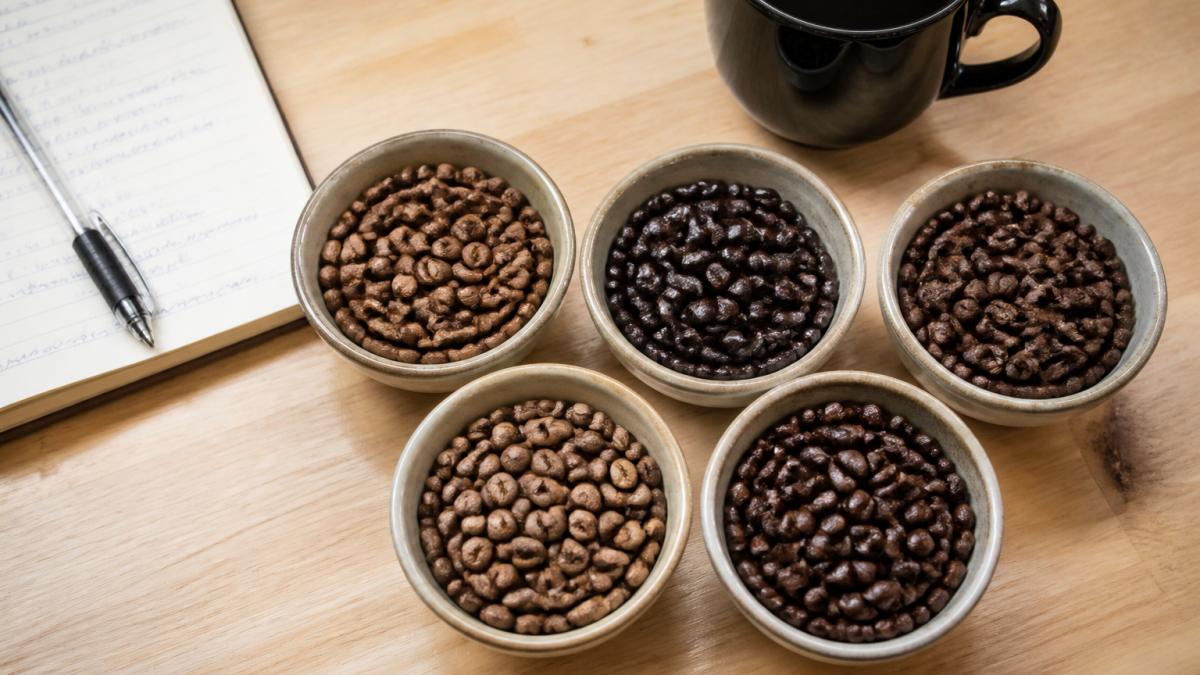
The five coffees below cover washed Kenyan brightness, Brazilian sweetness and experimental processing, so there is an option for every palate and brew method. Each lists its roast level, processing and a published espresso recipe.
Mount Kenya Kiamaina Nyeri
A washed AA from Nyeri, medium roast, and the most balanced of the group. Tasting notes run to blackcurrant, dark and red berries, blood orange and brown sugar, with medium acidity and medium body. It works with milk. Our published recipe is 20 g in, 35 g out, 92C, 26-29 seconds.
Kenyan Single Origin Espresso
The Kiriaini AA from Murang'a County is the brightest option here, with high acidity and notes of white currants, honey, dark chocolate and mandarin. At $19.00 it is the entry point into African single-origin coffee, and it rewards a shorter ratio: 20 g in, 34 g out, 92C, 26-29 seconds.
Costa Rica Volcan Azul Geisha Natural
Geisha is the varietal that made specialty coffee famous, and this natural-process lot from volcanic soil at 1,500 m delivers jasmine, tropical fruit, lime and red currants. Medium-high acidity, medium-light body, and a longer 45 g yield at 92C for 27-30 seconds.
Colombia Campo Hermoso Pink Bourbon Natural Rose Mossto Co-Fermented
The most unusual coffee on the list: cherries are anaerobically fermented, then carbonically macerated, with the extracted juice built into a rose water and lactic culture infused back into the mucilage. The cup tastes of ripe cherries, rosewater, florals, grape lolly and watermelon. Medium-high acidity, medium body, 45 g yield.
Brazil Joia Rara Farm
Fourth-generation family farm, Cerrado Mineiro, medium roast, medium acidity. Notes of citrus and tropical notes to honey sweetness with a clean finish. This is the comfort cup of the five and the easiest to serve to a mixed table.
| Coffee | Price | Process | Acidity | Best For |
|---|---|---|---|---|
| Mount Kenya Kiamaina Nyeri | $23.00 | Washed | Medium | Balanced espresso, milk drinks |
| Kenyan Single Origin Espresso | $19.00 | Washed | High | Bright filter and espresso |
| Costa Rica Volcan Azul Geisha | $35.00 | Natural | Medium-high | Delicate pour-over |
| Colombia Campo Hermoso Rose Mossto | $35.00 | Natural co-fermented | Medium-high | Adventurous drinking |
| Brazil Joia Rara Farm | $29.00 | Natural, washed, pulped natural | Medium | Everyday milk-based coffee |
How Single-Origin Coffee Roasters Compare on Price and Value
Most single-origin comparisons stop at the shelf price, but a bag is only worth what you drink inside its window.
Here is the same five coffees, priced per gram and per cup at a 20 g espresso dose.
| Coffee | Bag price | Price per gram | Price per 20 g cup | Stated drinking window |
|---|---|---|---|---|
| Mount Kenya Kiamaina Nyeri | $23.00 | $0.092 | $1.84 | 1-5 weeks post roast |
| Kenyan Single Origin Espresso | $19.00 | $0.076 | $1.52 | 1-5 weeks post roast |
| Costa Rica Volcan Azul Geisha | $35.00 | $0.140 | $2.80 | 1-5 weeks post roast |
| Colombia Campo Hermoso Rose Mossto | $35.00 | $0.140 | $2.80 | 1-5 weeks post roast |
| Brazil Joia Rara Farm | $29.00 | $0.116 | $2.32 | 1-5 weeks post roast |
Three levers drive value in single-origin coffee:
- Price per gram. A 250 g bag at $19.00 and a 250 g bag at $35.00 are the same amount of coffee. Divide before you compare.
- Drinking window. A narrow window is not a drawback if you drink the bag inside it. It becomes a drawback only when you buy more than you can finish. A 250 g bag at 20 g per shot is about 12 espressos, or roughly six days at two a day. That is well inside a one-to-five-week window.
- Published recipe. A roaster who gives you dose, yield, temperature and time removes the dialling-in waste that quietly inflates the real cost of a bag. If you burn 60 g of beans finding the grind, that is three espressos you paid for and did not drink.
Home brewers often treat the cheapest bag as the value option and the most expensive as the treat, but the per-cup maths usually reverses that instinct.
Delivery cost belongs in the same calculation. A flat shipping fee spread across one bag adds meaningfully to the per-cup price, while the same fee across two bags halves it per bag. Add the delivery charge to the bag price before dividing by grams.
Why African Single-Origin Coffee Deserves a Place in Your Rotation
African single-origin coffee, and Kenyan coffee in particular, offers a flavour structure you cannot replicate elsewhere: sparkling acidity, blackcurrant depth and a juicy finish that cuts cleanly through milk. Finding a lot that carries the hallmark blackcurrant properly is rarer than the marketing suggests.
That acidity is not a flaw to be tamed, it is why Kenyan coffee works so well as a morning espresso. If your rotation has drifted toward sweeter, low-acid cups, a washed Kenyan is the correction.
Brew-Method Alternatives: Best Pour-Over Coffee for Single Origins
The best pour-over coffee for single origins is a washed, medium-roast coffee with clear acidity and a published recipe, because filter brewing rewards clarity over body. For pour-over, reach for the Mount Kenya Kiamaina Nyeri: it is washed, carries defined fruit, and holds its structure with more water and less pressure.
How to Achieve Consistent Coffee Extraction with Single Origins
Consistent coffee extraction comes from holding three variables steady: dose, grind and water temperature. Change one at a time, taste, then decide. Single origins feel harder to dial in than blends because there is no second component to hide behind.

This is where a published recipe earns its keep. If the roaster tells you 20 g in, 35 g out, 92C, 26-29 seconds, you have a fixed target.
Availability and Delivery: Getting Freshly Roasted Beans
Freshly roasted beans are a logistics problem, not a marketing claim. Coffee needs a few days to rest after roasting, then should be drunk inside its window.
When you compare availability across roasters, ask four concrete questions rather than reading the homepage:
- Is the roast date printed on the bag, or only a best-before date? A best-before date tells you nothing about freshness. A roast date lets you calculate exactly where you are in the window.
- Is the coffee roasted to order or held in stock? Roast-to-order means a short wait before dispatch but a fresher bag on arrival. Held stock can ship same day but may already be a week or two old.
- Can you reorder the same lot before it sells out? Limited-lot single origins sell through and are replaced by the next harvest. That is a feature of specialty sourcing, not a fault, but it means you should buy the lot you like while it exists rather than assume it will be there next month.
- What does delivery cost and how long does it take? A flat shipping fee spread across one bag adds to the per-cup price. The same fee across two bags halves it per bag, which is the one legitimate reason to order more than one bag at a time.
Subscriptions change the calculation. A fixed-cadence subscription solves freshness automatically, because the bag arrives as you finish the last one.
Stock availability is the other half of the comparison.
Packaging matters too. Our bags are fully compostable, which is a small detail until you open a new bag every fortnight.
Conclusion
The hardest part of switching roasters is not finding good coffee. It is finding a roaster whose consistency means you stop adjusting your grinder every morning. That is the problem we set out to solve at Garage Roasters, and it shapes everything from our research-based roasting to our published espresso recipes.
Every coffee we sell is roasted by a scientist, refined over thousands of research roasts, and shipped with a stated drinking window of one to five weeks.
Frequently Asked Questions
What should I look for in a single-origin coffee roaster?
Look for a roaster that states the roast date clearly and roasts to order, because single origin flavours fade quickly. Check whether tasting notes and processing methods are listed for each lot, and confirm the beans suit your brew method. A roaster that publishes espresso recipes and optimal drinking windows, like Garage Roasters, gives you a repeatable starting point. Also consider packaging and whether the roaster specialises in the origins you enjoy, such as African single-origin coffee.
How do single-origin coffees differ in flavour?
Flavour follows origin, variety and processing. Kenyan washed coffees often show blackcurrant, citrus and sparkling acidity, while Colombian co-fermented lots can taste of ripe cherry and rosewater. Brazilian naturals lean toward citrus and tropical notes to honey sweetness with a clean finish, and Costa Rican Geisha brings jasmine, tropical fruit and lime. Roast level and brew method shift these notes further, so taste a few origins side by side to find your preference.
How can I get consistent results when brewing single-origin coffee?
Start with a fixed recipe: dose, yield, water temperature and time. For espresso, use the roaster's published recipe as a baseline, such as 20 g in and 35 g out at 92C over 26-29 seconds, then adjust grind size only. For pour-over, keep water temperature and pour timing steady. Weigh your input and output every time. Consistent coffee extraction comes from controlling variables one at a time rather than changing several at once.
Is freshly roasted coffee better for single-origin brewing?
Yes, within a window. Most single origins peak between one and five weeks after the roast date, which is the optimal drinking window Garage Roasters lists for its coffees. Beans roasted days earlier can release too much carbon dioxide and taste flat or harsh. Buying from a roaster that roasts to order and prints the roast date helps you hit that window, especially for filter and pour-over brewing where delicate aromatics fade fastest.
Ready to stop dialling in every morning? Browse our single-origin range, order freshly roasted beans with a published recipe on every bag, and get consistent extraction from the first shot.