
Last Updated: November 7, 2026
Quick Summary
Single dosing means loading one weighed dose of beans per shot and clearing the grinder afterward, which limits stale grounds and makes bean changes simple. A hopper keeps a batch of beans ready for fast, repeated grinding, but it leaves more retained grounds and more waste when switching coffees.
- Single dosing grinds only what you need, so less stale coffee carries into the next shot.
- Hopper grinding is faster, since the beans are already loaded in the machine.
- Single-dose workflows usually pair with weighed dosing, which is the most repeatable method.
- The Turin DF54 V4 and DF83 Gen 2 both have retention of less than 0.1 gram.
- Single dosing makes switching beans easier because each dose stands alone.
Table of Contents
- What Single Dosing and Hopper Grinding Actually Mean
- How Each Grinder Workflow Runs in a Real Morning Routine
- Dose Accuracy: Timed, Volumetric and Weighed Dosing Compared
- Coffee Grinder Retention and Why Stale Grounds Matter
- Switching Coffee Beans in a Grinder Without Wasting Coffee
- Single-Dose Grinder Pros and Cons for Home Espresso
- Choosing Your Grinder Workflow and Your Next Step
- Frequently Asked Questions
What Single Dosing and Hopper Grinding Actually Mean
Single dosing means you load one measured dose of beans into the grinder for each shot, then empty the grinder before the next one. Hopper grinding keeps a larger batch of whole beans sitting in a reservoir above the burrs, so you grind straight from it every time. The difference between these two workflows is more practical than most people expect.
The core distinction is what happens to the beans between grinds. With a hopper, beans sit exposed to air and light, and the grinder holds a small amount of old grounds inside its chute and burrs. With single dosing, you grind only what you need and clear the machine, which limits how much stale coffee carries into your next shot.
Neither approach is automatically better. Each one trades speed for control, and the right choice depends on how you make coffee every day.
How Each Grinder Workflow Runs in a Real Morning Routine
A hopper workflow is fast because the beans are already in the machine. You fill the bean container, set the grind, press the button, and pull the shot. Most people can repeat that sequence half asleep, which is why hoppers remain the default in busy households and cafés. The catch is that the first shot of the day may carry grounds left in the chute from yesterday, and the dose is only as repeatable as the grinder's timer or volumetric mechanism allows.
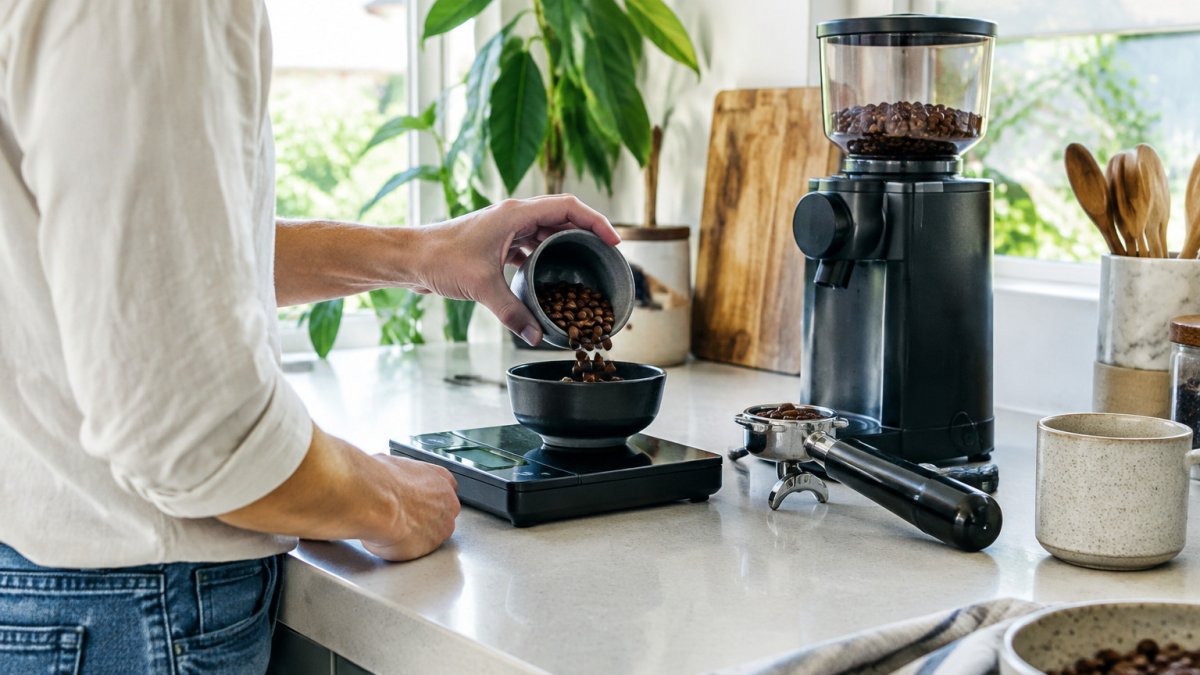
Single dosing adds a few steps, but each one is deliberate. You weigh the beans, pour them into the chute, grind, and then purge or clear the remaining grounds. That extra minute matters on a weekday, but it also gives you a fixed, repeatable dose every time, which becomes useful once you start chasing a consistent shot.
Hopper workflow, typical morning:
- Fill the hopper once a week or as needed
- Set grind size and press start
- Pull the shot straight away
- Minimal cleanup between drinks
Single-dose workflow, typical morning:
- Weigh the dose on a scale
- Load the beans into the chute
- Grind, then purge any leftover grounds
- Brush or wipe the chute and burrs occasionally
The single-dose routine adds weighing and loading steps, so it takes longer per drink than pressing start on a hopper grinder. Across two drinks a day that is a small daily cost; across several drinks for guests, the delay adds up.
Watch out: the hopper's speed advantage disappears if you are constantly emptying and refilling it to chase a different bean, because the changeover steps are the same ones single dosers perform every time.
If you make one or two coffees a day, the extra steps are easy to absorb. If you're making several drinks for guests, the hopper usually wins on pace. The practical middle ground is a grinder that can run either way, so you can use the hopper for a busy morning and single dose when you want to experiment.
Dose Accuracy: Timed, Volumetric and Weighed Dosing Compared
Dose accuracy depends on how you measure what goes into the portafilter, and hopper workflow is not one uniform method. Timed dosing grinds for a set number of seconds, which works only if your grinder produces a steady output rate. Volumetric dosing uses a measured scoop or chamber, which is quicker but can drift as beans change density or roast age. Weighed dosing, where you place a scale under the dose or use a scale-integrated grinder, is the most repeatable method because it tracks the actual mass of coffee.
The distinction matters because a hopper grinder can use any of the three, while a single-dose grinder is almost always paired with weighed dosing. That is the unique angle most comparisons miss: the workflow difference is partly a dosing-system difference. A hopper grinder on a timer can be very consistent with one bean and one grind setting, but it drifts when you change roast age, bean density, or grind size. A hopper grinder with grind-by-weight stops when the scale reaches the target mass, which removes much of that drift but adds cost and complexity. A single-dose grinder sidesteps the problem because the chute holds exactly what you put in, so the weighed dose you load is the dose you get.
The Turin DF54 V4 Single Dose Grinder, priced at $417.00, has a 50g bean chute that expands with a bellow for larger batches. The Turin DF83 Gen 2 Single Dose Grinder, at $849.00, uses 83 mm flat burrs and holds up to 50 grams with its bellow.


The Fellow Opus 2 Conical Burr Grinder, at $386.00, includes a single-dose load bin with a 100 g capacity and a 30 g espresso catch cup.

Watch out: a timed hopper grinder that is accurate on Monday can drift by Friday if the beans have aged and the output rate has changed, so recalibrate the timer when you open a new bag rather than trusting the old setting.
The three dosing methods differ in how repeatable they are, as summarised below.
| Dosing method | How it works | Repeatability |
|---|---|---|
| Timed | Grinds for a set number of seconds | Works only with steady output rate |
| Volumetric | Uses a measured scoop or chamber | Quicker, but can drift with bean density or roast age |
| Weighed | Tracks actual mass of coffee | Most repeatable method |
Turin grinder prices
Coffee Grinder Retention and Why Stale Grounds Matter
Retention is the amount of ground coffee left inside a grinder after a grind finishes. For a deeper look at how burr design shapes the grind, see how grinder burrs affect pour over coffee. Those leftover grounds have already been exposed to air and can taste flat or dull compared with fresh grounds. When your next dose passes over them, you can end up with a cup that tastes slightly off, even if the beans are fresh.
The Turin DF54 V4 and DF83 Gen 2 are both listed with retention of less than 0.1 gram. The Fellow Opus 2 is listed with near-zero grind retention.
Switching Coffee Beans in a Grinder Without Wasting Coffee
Changing beans is where the two workflows differ most sharply. With a hopper, you have to empty the bean container, run the grinder to clear the old beans out, and then add the new ones. That usually means discarding some coffee, and it can take a few cycles before the grinder is clean of the previous roast.
Single-dose grinders make switching simpler because each dose stands alone. You clear the chute after each grind, so changing from one coffee to another only requires emptying the grinder and loading the next weighed dose. You still want to purge any residual grounds, but there is no large hopper of old beans to flush through.
If you rotate between several coffees, single dosing reduces waste. If you stick with one bean for weeks at a time, the hopper's convenience may outweigh that benefit.
Single-Dose Grinder Pros and Cons for Home Espresso
Single-dose grinders suit people who care about repeatability and want to control each dose. Their main strengths are low retention, quick bean changes, and dose-by-dose consistency. Most users find that weighing the dose each time becomes second nature within a week.
Their drawbacks are real, though. Grinding each dose takes more hands-on time than pressing a button and walking away. You need a scale, and you need to clear the grinder regularly. The higher-end models are also significantly more expensive than standard hopper grinders.
Pros of single-dose grinders:
- Very low retention, with the Turin models measured below 0.1 gram
- Easy to switch between beans
- Repeatable dose when weighed
- Less stale coffee carried into the next shot
Cons of single-dose grinders:
- More steps per drink
- Requires a scale for best results
- Less practical for making many drinks in a row
- Higher upfront cost, with the DF83 Gen 2 at $849.00
Choosing Your Grinder Workflow and Your Next Step
Start with how you actually use your machine. If you make one or two espressos a day and like to experiment with different beans, single dosing gives you cleaner changeovers and lower retention. If you make drinks for a household and want a grinder that runs with minimal fuss, a hopper workflow will feel more natural.
Hopper users who want to explore single-dose benefits can start with a grinder that offers both options. The Fellow Opus 2 Conical Burr Grinder, at $386.00, is designed for espresso, pour-over, electric coffee makers, French press, AeroPress and cold brew, and includes an espresso dosing cup compatible with 54 mm and 58 mm portafilters.
Whichever path you choose, use a consistent dose and clear your grinder regularly. If you're still undecided, espresso-style shots without a full setup change covers practical options. Those two habits will do more for your cup than any single feature on the box.
Frequently Asked Questions
What is the difference between single dosing and using a grinder hopper?
Single dosing means you load only the beans you need for one shot into the grinder, which is then emptied after each use. A hopper grinder holds a larger batch of beans in a reservoir above the burrs, so the beans sit exposed to air between sessions. The practical difference is that single dosing avoids leaving the rest of your beans in a hopper, while a hopper is quicker for daily use with a single coffee. Garage Roasters' Turin DF54 V4 holds up to 20 grams without a bellow and 50 grams with one, so you can choose the batch size that suits your routine.
Is single dosing better for home espresso?
Single dosing tends to suit home espresso well because it avoids leaving beans in the hopper, which keeps unused coffee from going stale and makes switching beans far simpler. It also lets you weigh each dose for repeatable shots. The trade-off is slightly more effort per shot. If you brew a single coffee every day and never change it, a hopper may feel more convenient. The Turin DF83 Gen 2 has an 83 mm burr set and a 50 gram capacity with a bellow.
Does single dosing keep coffee fresher?
Yes, in practical terms. Coffee beans begin losing aroma once they are ground and oxidise with exposure to air, so beans left in a hopper for days are more exposed than beans ground as needed. Single dosing limits how long the rest of your bag sits in the grinder. Grinding only what you brew means each cup uses freshly ground coffee.
How much coffee should you put in a single-dose grinder?
Most home espresso recipes use roughly 16 to 20 grams of ground coffee for a double shot, so your dose should match your basket and recipe. Weighing beans on a digital scale before grinding gives the most repeatable result. The Fellow Opus 2 has a single dose load bin holding up to 100 grams and includes an espresso dosing cup compatible with 54 mm and 58 mm portafilters, .
