
Table of Contents
- Why Home Baristas Look for an Espresso Alternative
- 5 Espresso-Style Brewing Methods Compared
- Single Origin vs Blend for Espresso: Which Suits Your Setup?
- How to Dial In Espresso at Home Without Daily Tweaking
- Best Coffee Beans for Home Espresso Machines
- Cost Per Cup, Caffeine-Free Options and Sensory Profiles
- Conclusion
- Frequently Asked Questions
Last Updated: October 2, 2026
Why Home Baristas Look for an Espresso Alternative
Plenty of home baristas want a rumble coffee alternative for espresso without the cost, counter space or daily dialling-in that a machine demands. A rumble coffee alternative for espresso covers any brewing method that produces a concentrated, syrupy shot without a pump-driven machine. The trade-off is real: you give up some pressure and crema, and you gain consistency you can repeat every morning.
At Garage Roasters, we hear the same thing from customers running basic setups. They want a full-bodied shot with chocolate and caramel notes, not a thin cup that changes character every time the weather shifts. Below, we compare the five methods that get closest, and explain which beans suit each one.
5 Espresso-Style Brewing Methods Compared
Each method below trades pressure for control. Here's how they stack up before we get into the detail.
| Method | Pressure | Body | Grind | Best For |
|---|---|---|---|---|
| Stovetop maker | 1-2 bar | Full | Fine | Budget espresso-style shots |
| Manual press | 1-2 bar | Medium | Medium-fine | Portable, forgiving brewing |
| AeroPress | Manual | Medium | Medium-fine | Fast single cups |
| Pour-over | Gravity | Light-medium | Medium | Clarity and filter coffee |
| Immersion | None | Medium | Coarse | Low-effort batches |
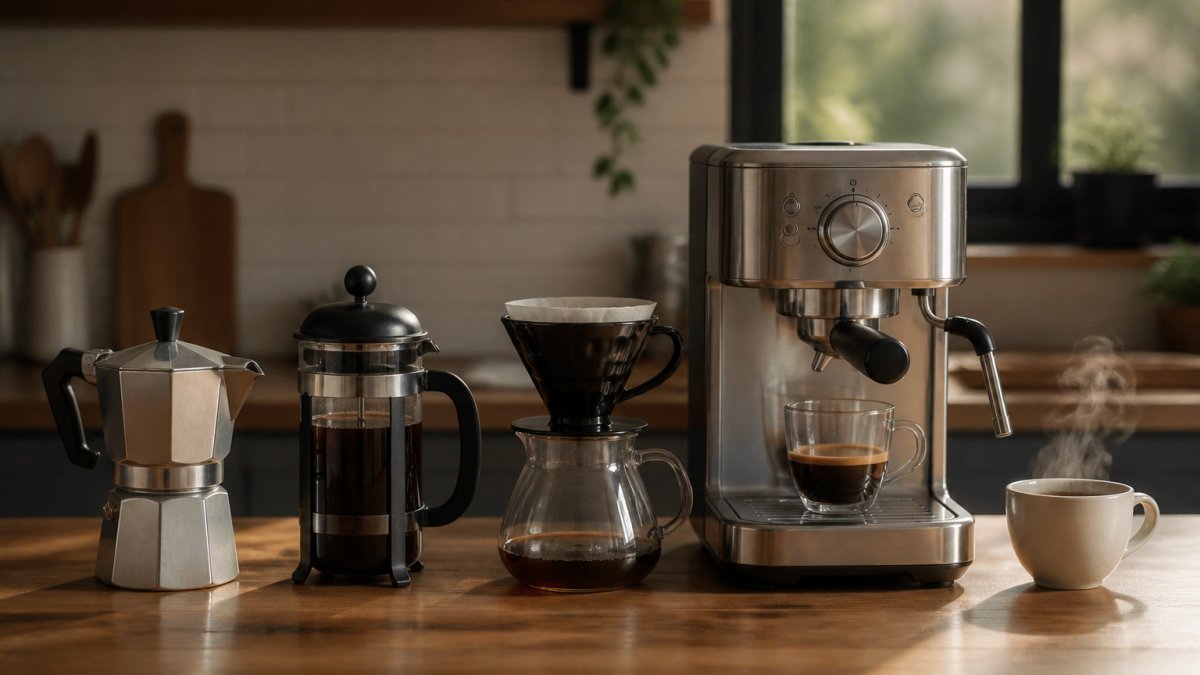
Stovetop Makers: Pressure Without a Machine
A stovetop maker, often called a moka pot, pushes water through coffee at roughly 1 to 2 bar. That's far below the 9-bar standard of a pump machine, but it's enough to build a thick, syrupy shot with a deep caramel sweetness.
Use a fine grind, fill the basket level without tamping, and pull it off the heat the moment it starts to sputter. Over-extraction is the common mistake here. Leave it on too long and you get bitterness that no amount of milk will hide.
Manual Presses and Immersion Brewing
Immersion brewing soaks the grounds fully before you plunge or filter, which makes it forgiving and repeatable. A manual press or plunger gives you medium body with far less sensitivity to grind size than espresso.
Go medium-coarse on the grind and steep for around four minutes. The result won't have crema, but it will have weight and roundness. For anyone who dislikes tinkering, this is the method that asks the least of you.
Filter Coffee Techniques That Build Body
Filter coffee can still deliver an espresso-style experience if you adjust the brew ratio and grind. A pour-over with a medium grind and a slow, controlled pour builds more mouthfeel than a standard drip batch.
The trick is agitation. Stir the bloom gently, then pour in slow circles. This raises extraction and pulls more of the caramel and chocolate notes forward. It won't match a stovetop maker for body, but it's the cleanest-tasting option on this list.
Single Origin vs Blend for Espresso: Which Suits Your Setup?
The answer depends on what you want from the cup. Single origin vs blend for espresso comes down to whether you value a distinctive flavour profile or a dependable, repeatable shot.

Single origins show off a specific farm and roast profile. Our Ethiopian Single Origin Espresso ($19.00) is a natural Guji Alaka with cocoa, candy citrus, limoncello and apricots. It's roasted medium for espresso, with a recipe of 20 g in, 33 g out at 92°C over 28 to 31 seconds. The Kenyan single origin ($19.00) runs higher in acidity, with white currants, honey, dark chocolate and mandarin.
Blends trade some of that character for consistency. The Ashfield Espresso Blend ($16.00) leans on nuts, caramels and milk chocolate, and works equally well as espresso or with milk. For a darker profile, Bête Noire ($18.00) brings chocolate, caramel and low acidity with a very full body.
How to Dial In Espresso at Home Without Daily Tweaking
Dialling in gets easier when your beans are consistent. The goal is a repeatable recipe you can trust, not a fresh puzzle every morning.
Start with a fixed dose and yield, then change one variable at a time:
- Dose: weigh your grounds, don't eyeball them
- Yield: stop the shot at a set weight, not a set time
- Grind: adjust only if the shot runs too fast or too slow
- Temperature: hold it steady at 92°C for most medium roasts
Most daily tweaking comes from beans that age unevenly. A roast built for stability holds its recipe for longer, which is where a methodical, research-based roast helps.
Best Coffee Beans for Home Espresso Machines
The best coffee beans for home espresso machines are fresh, medium-roasted beans matched to your brewing method and your taste.
Ethiopian Single Origin Espresso →
Look for a clear roast date, a roast level suited to espresso, and tasting notes that match what you enjoy. Medium roasts balance sweetness and acidity; darker roasts push chocolate and caramel forward.
For anyone who likes to experiment, our Coffee Prototypers ($29.00) rotates a new single origin each month, roasted for espresso in 250 g whole-bean lots. It's the opposite of a daily-driver blend, and that's the point.


Cost Per Cup, Caffeine-Free Options and Sensory Profiles
This is where manual methods pull ahead of a machine, and where most guides stop short. Three things matter: what each shot actually costs, what you can brew when you want no caffeine at all, and which method best extracts the flavour profile you're chasing.
Cost per cup, worked through
A 250 g bag priced between $16.00 and $19.00 holds roughly 12 to 15 double-shot doses at 18 g each. That puts a home shot at roughly $1.10 to $1.60 before milk, against typical café prices of $4.50 to $5.50 for a similar drink.
Run the same maths across methods and the spread is small, the beans dominate the cost, not the equipment.
Caffeine-free espresso alternatives
Bean-free brewing is the gap most guides ignore. Chicory root, dandelion root and roasted barley all brew a dark, bittersweet, full-bodied cup that mimics espresso mouthfeel without any caffeine. Rooibos adds a softer, sweeter profile with a reddish crema-like foam when brewed strong.
Use the same methods as coffee: a stovetop maker or manual press at a fine-to-medium grind, roughly 18 g to 20 g per 60 ml of water, steeped or pushed for a concentrated shot. Expect less crema and a flatter top note than coffee, but comparable body.
Sensory profile mapping
Match the method to the profile you want, not the other way around:
- Citrus brightness and acidity: Kenyan single origin, filter or pour-over, the paper filter strips oils and lets acidity lead.
- Caramel sweetness and cocoa: Ethiopian single origin, stovetop maker, pressure and heat push Maillard-driven sweetness forward.
- Chocolate and nuts, low acidity: Bête Noire, manual press, full immersion rounds off sharp edges and builds body.
- Bittersweet, caffeine-free: chicory or dandelion root, stovetop maker, heat and pressure extract the roasted, earthy notes.
Conclusion
Getting espresso-style coffee at home without a machine is a matter of matching method to bean, then holding the recipe steady. The hard part isn't the brewing. It's finding beans consistent enough that you stop adjusting every day.
Garage Roasters roasts with a scientific, research-based approach refined over thousands of test roasts, so the recipe you dial in on Monday still works on Friday. Our single origins and blends are roasted for espresso, and every order ships in fully compostable packaging.
Frequently Asked Questions
What is the best substitute for espresso?
A stovetop maker produces the closest espresso-style shot without a machine, followed by a manual press and a fine-grind filter method. Each delivers a concentrated cup with body, though none generates the 9-bar pressure of a true espresso machine. Grind size and brew ratio matter more than the device itself. Use a medium-coarse grind for stovetop and a finer grind for manual presses, and aim for a 1:2 ratio of coffee to water to keep the shot intense rather than watery.
Can I use single-origin coffee for espresso?
Yes. Single-origin beans roasted for espresso work well in any espresso-style method. A medium-roast Ethiopian single origin brings cocoa, candy citrus and apricot notes with medium acidity and medium body, and it holds up with milk. A washed Kenyan single origin offers higher acidity with white currants, honey and mandarin. The choice between single origin and blend comes down to whether you want a distinct origin character or a rounded, consistent profile.
How do I dial in espresso at home without adjusting every day?
Start with the roaster's recommended recipe, such as a 20 g dose, 33 g yield, 92C water and 28-31 seconds. Weigh your dose and yield rather than judging by eye, and keep one variable fixed while changing another. Beans with a stable roast profile reduce the need for daily changes because the extraction behaves predictably across the bag. Store beans sealed and away from light, and use them within the 1-5 week post-roast window for the most consistent results.
Is there a caffeine-free espresso alternative?
You can replicate the espresso experience without caffeine using decaffeinated beans in a stovetop maker, manual press or filter method. The brewing technique stays the same; only the bean changes.
How much does each espresso-style method cost per cup?
A 250 g bag of whole beans at $19.00 delivers roughly 12 double shots at a 20 g dose, which works out to about $1.58 per shot before milk or extras. The brewing device is a one-off cost: a stovetop maker or manual press sits at the lower end, while a home espresso machine costs more upfront. Over a year of daily brewing, the bean cost dominates, so buying fresh whole beans matters more than the equipment price.