
Table of Contents
- Why Green Coffee Quality Decides What Ends Up in Your Cup
- Physical Signs: What High Quality Green Coffee Looks Like
- Green Coffee Moisture Content: The Number That Predicts Shelf Life
- Coffee Bean Density Explained: Why Dense Beans Roast Better
- Identifying Green Coffee Defects Before You Commit
- Cupping, Traceability and the Paper Trail Behind Quality
- Ageing vs Staling: What Home Roasters Get Wrong
- Conclusion
- Frequently Asked Questions
Last Updated: September 29, 2026
Why Green Coffee Quality Decides What Ends Up in Your Cup
Signs of high quality green coffee are visible long before the beans meet heat. Bean density, moisture content, defect count and traceability determine what a roaster can achieve. At Garage Roasters, years of sourcing top-grade African and Colombian single origins taught one consistent lesson: roasting cannot rescue poor raw material.
Green coffee is the raw, unroasted seed of the coffee plant, graded and traded before it sees a roaster. Its quality sets a hard ceiling on your cup.
A roaster can ruin great green coffee, but no roast profile fixes beans that arrived defect-heavy, dried out or years past harvest.
Physical Signs: What High Quality Green Coffee Looks Like
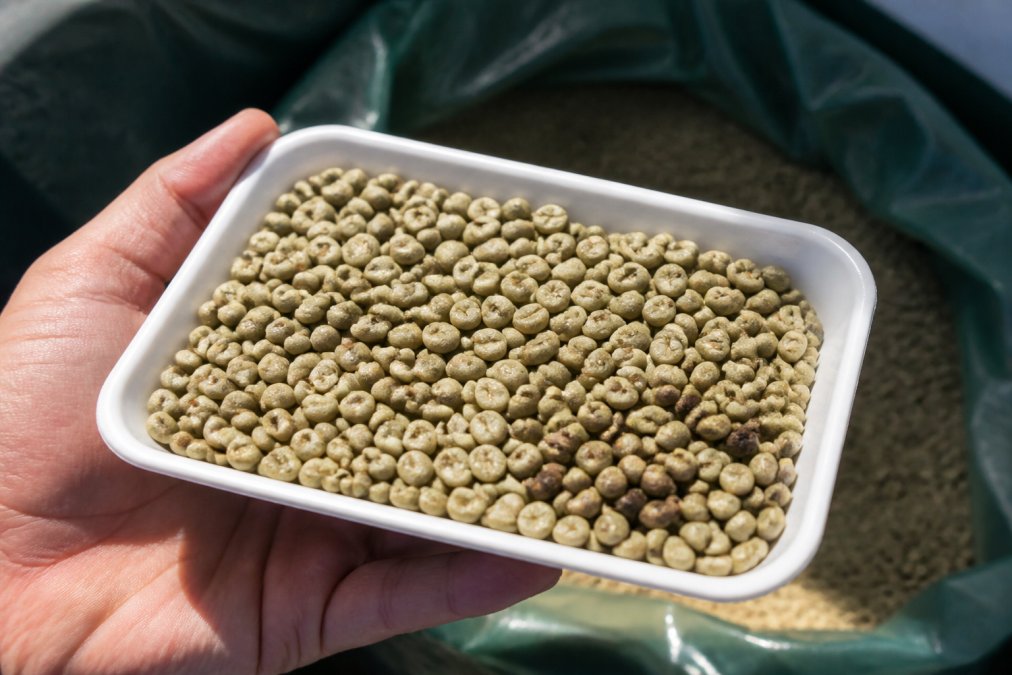
High quality green coffee looks uniform: consistent colour, consistent size, and a clean, grassy or nutty aroma with no off-notes. Irregularity is the first warning sign.
Colour, Uniformity and Screen Size
Fresh green coffee ranges from pale bluish-green to muted olive, depending on processing. Washed beans are cleaner and more consistent in colour; natural beans show more variation, which is expected rather than a fault.
Aroma and the Papery or Woody Notes That Signal Staleness
Smell the beans first. Fresh green coffee carries a grassy, hay-like or lightly nutty aroma. Papery or woody notes mean lost moisture and volatiles, and the cup will taste flat regardless of roast profile.
Green Coffee Moisture Content: The Number That Predicts Shelf Life
Green coffee moisture content is the percentage of water weight in the raw bean and the best predictor of roasting and storage behaviour. Specialty-grade green coffee is traded at roughly 10 to 12 per cent moisture, with anything outside about 9 to 13 per cent treated as a risk lot. Too dry and the bean scorches and loses structure early; too wet and you get uneven development, muted acidity and a shorter roasted shelf life.
Water Activity vs Moisture Content
Water activity measures how much moisture is available for microbial and chemical reactions, not just present in the bean. Two lots can share moisture content but differ in water activity, and the higher-activity lot ages faster and is more vulnerable to mould. A lot can read perfectly on moisture yet show elevated water activity after a humid shipping leg, a problem moisture content alone cannot reveal.
How to Check Moisture Without a Lab
You do not need a lab-grade meter for useful signal. Three checks, run together, tell you more than any single number:
- The squeeze test. Take a bean between thumb and forefinger and press. A well-conditioned bean gives slightly and then cracks cleanly. A bone-dry bean shatters or crumbles; a too-wet bean squashes without a clean break.
- The bite test. Bite a bean in half. Fresh, correctly stored green coffee is hard and crisp, almost like a raw grain. If it chews soft or spongy, moisture is likely high. If it powders instantly, it is likely low.
- The weight-and-wait check. Weigh a small sample, leave it in a warm dry spot for a few days, and weigh again. A large drop points to high initial moisture; almost no change points to a dry, stable lot.
Storage Implications Once You Have the Number
Moisture content and water activity together dictate storage. A drier, lower-activity lot holds its character longer and tolerates a few months in a cool, dark, sealed container. A wetter, higher-activity lot must be roasted sooner and stored colder and drier, because it is already degrading on arrival. Buy what you will roast within a few months, store the rest properly, and treat any papery or woody lot as past its useful window regardless of the meter.
Coffee Bean Density Explained: Why Dense Beans Roast Better
Coffee bean density explained simply: denser beans hold more structure, roast more evenly, and typically carry more sweetness and acidity than porous, low-density beans.
Ethiopian Single Origin Espresso →
Identifying Green Coffee Defects Before You Commit
Identifying green coffee defects starts with a visual pass: spread beans on a flat white surface in good natural light and look for colour outliers, insect damage, mould and misshapen seeds. Most home roasters skip this step, yet it most reliably separates a good lot from a bad one before any heat is applied.
A Visual Defect Checklist
Work through the sample in this order, because the most damaging defects are also the easiest to miss:
- Black beans. Fully blackened, often from over-fermentation or microbial damage. They taste ash-like and medicinal and can dominate a small batch.
- Sour or vinegar beans. Pale brown with a wrinkled, sometimes sticky surface, usually from fermentation that went too far. They read as vinegar or acetic acid in the cup.
- Foxy beans. Reddish-brown and often the result of immature cherries or poor processing. They taste sour and woody.
- Quakers. Pale, underdeveloped beans that fail to brown properly during roasting. They usually stem from immature cherries and taste grassy or papery in the cup.
- Insect damage. Small, clean round holes, often with a hollow interior, caused by coffee berry borer. Heavily bored beans roast unevenly and taste flat.
- Mould. White, grey or greenish fuzz, sometimes only visible on the underside of a bean. Any visible mould is a reject signal for the whole sample, not just the affected beans.
- Broken, chipped or misshapen beans. Not always a flavour fault on their own, but a high proportion signals rough handling and poor sorting upstream.
- Stones and foreign matter. Always check the bottom of the tray. A single stone can destroy a grinder and is a sign of weak sorting at origin.
What Each Defect Does in the Cup
Defects do not just look wrong, they taste wrong, and a small number can flatten an otherwise good lot. Black and sour beans contribute ash, medicine and vinegar; quakers contribute grass and paper; insect-damaged beans taste hollow and flat. Because faults concentrate in a small fraction of the sample, a lot that looks fine at a glance can still cup poorly.
Sorting as a Quality Filter, Not Just a Chore
For home roasters, sorting is the cheapest quality upgrade available. A lot with a low defect count after sorting roasts more evenly, cups more cleanly and holds its character longer than a cheaper lot you must pick through. Comparing two suppliers at similar prices? Ask each for a defect count. A supplier who can quote one is sorting; one who cannot hopes you will not notice.
Cupping, Traceability and the Paper Trail Behind Quality
Cupping is the standardised sensory method for evaluating coffee's aroma, acidity, body, sweetness and flavour. It's how buyers translate physical and chemical signals into a cup score.
Ageing vs Staling: What Home Roasters Get Wrong
Ageing and staling are not the same, and treating them as identical leads home roasters to throw out good coffee or keep bad coffee too long.
| Signal | What It Indicates | What To Do |
|---|---|---|
| Even colour, uniform size | Consistent grading | Buy with confidence |
| Papery or woody aroma | Staleness | Avoid or use immediately |
| Low bean density | Porous, likely lower altitude | Expect muted acidity |
| High defect count | Poor sorting or processing | Sort manually or reject |
| Clear traceability | Repeatable quality | Prioritise these suppliers |
Conclusion
Judging green coffee quality comes down to signals you can check yourself: colour, aroma, density, moisture and defect count. Get those right and your roast has a fair chance; skip them and you're guessing.
Frequently Asked Questions
What are the visual indicators of specialty-grade green coffee?
Specialty-grade green coffee shows consistent colour across the batch, usually a pale blue-green or grey-green depending on processing method. Beans are uniform in size (screen size) with few visible defects. You should see no black beans, sour beans, or insect damage. Washed process coffees look cleaner than natural process coffees, which retain some silverskin. A defect count under 5 per 300 g sample is a strong signal of specialty grade.
How does green coffee moisture content affect quality and shelf life?
Green coffee moisture content between 10% and 12% is the target range for specialty coffee. Below 9% and the beans become brittle and lose roasting potential. Above 12.5% and they risk mould and fermentation during storage. Moisture content also affects how the bean behaves in the roaster. Beans with stable moisture roast more predictably, which matters if you want consistent results across batches.
What role does bean density play in roast development?
Dense beans hold heat more evenly and develop more complex flavour profiles during roasting. Density is shaped by growing altitude, varietal, and processing method. High-grown beans from altitudes above 1,500 m are typically denser. When you roast dense beans, you need more energy early in the roast to push through the drying phase. Lighter, less dense beans roast faster and can taste flat or baked if you apply too much heat.
How can you identify defects in green coffee samples?
Spread a 300 g sample on a flat white surface in good light. Look for black beans (full black or partial black), sour beans with a vinegary smell, fungus-damaged beans with yellow or brown patches, and insect-damaged beans with small holes. Quakers are pale, wrinkled beans that fail to brown during roasting. A defect count of zero to five in 300 g is specialty grade. Anything above 8 to 10 signals commercial grade.