
Table of Contents
- What Compostable Coffee Packaging Is Made From
- Compostable vs Recyclable Coffee Packaging: The Real Difference
- How Compostable Coffee Bags Break Down
- Home Compostable Coffee Packaging: What Actually Works
- Commercially Compostable Packaging and Industrial Facilities
- Coffee Bag Recycling and End-of-Life Disposal
- Certification, Standards, and How to Verify Claims
- Coffee Freshness and Packaging Performance Trade-offs
- Frequently Asked Questions
Last Updated: October 18, 2026
What Compostable Coffee Packaging Is Made From
Compostable coffee packaging starts with a fundamental shift in material choice. Instead of conventional plastic or plastic-lined paper, these bags use bio-based materials designed to break down in composting environments. The most common base material is kraft paper, layered with a compostable plastic film, typically made from polylactic acid (PLA), polyhydroxyalkanoates (PHA), or other plant-derived polymers.
The critical component is the oxygen barrier. Coffee stays fresh only when protected from oxygen and moisture. Traditional bags use polyethylene or aluminium foil for this barrier, neither of which composts. Compostable alternatives use PLA or PHA films that provide similar protection while remaining biodegradable under the right conditions. This is where the engineering challenge lies: the barrier must work well enough to preserve your coffee, yet break down reliably in a composting facility.
At Garage Roasters, we've chosen fully compostable packaging. The bag structure includes a kraft paper exterior, a compostable plastic lining, and a resealable top, all designed to keep your beans fresh while remaining fully compostable when you're done.
Compostable vs Recyclable Coffee Packaging: The Real Difference
The distinction between compostable and recyclable packaging matters more than marketing suggests. Recyclable packaging, typically paper with a plastic or aluminium lining, gets sorted into recycling streams where the materials are separated and reprocessed. Compostable packaging, by contrast, is designed to fully decompose into organic matter that enriches soil.
The practical difference affects what happens after you finish your coffee. A recyclable bag requires you to separate materials or place the entire bag in a recycling bin, where it may or may not actually get processed depending on local infrastructure. A compostable bag can go into an industrial composting facility where it breaks down alongside food scraps and garden waste, producing usable compost.
Here's where it gets complicated: recyclable packaging often has a longer shelf life and may offer better oxygen barriers than current compostable options. Recycling infrastructure exists in most areas, whereas industrial composting facilities remain less common. Yet recyclable bags still end up in landfills at significant rates; contamination, sorting errors, and market fluctuations mean not all recyclable material actually gets recycled.
Compostable packaging solves the end-of-life problem more definitively if industrial composting is available where you live. But it introduces a new challenge: compostable bags only work if you actually have access to a composting facility that accepts them. Throwing a compostable bag in your regular bin defeats the purpose entirely.
| Packaging Type | End-of-Life Process | Infrastructure Requirement | Actual Outcome Rate |
|---|---|---|---|
| Compostable | Industrial composting facility | Specialized facility nearby | High (if facility available) |
| Recyclable | Recycling stream sorting | Standard recycling pickup | Variable (30-50% actual recycling) |
| Conventional plastic | Landfill or incineration | None | Persistence for 400+ years |
How Compostable Coffee Bags Break Down
The decomposition process for compostable coffee bags requires specific conditions that don't exist in your garden or standard landfill. Industrial composting facilities maintain temperatures between 55-65°C, controlled moisture levels, and active microbial communities that accelerate breakdown. Under these conditions, a certified compostable coffee bag typically breaks down within 12 weeks.
The mechanism involves microbial enzymes breaking down the polymer chains in the PLA or PHA film into smaller molecules. Bacteria and fungi consume these molecules as an energy source, converting them into carbon dioxide, water, and biomass. The kraft paper component breaks down even faster, usually within 2-4 weeks, while the compostable film takes the full 12 weeks.
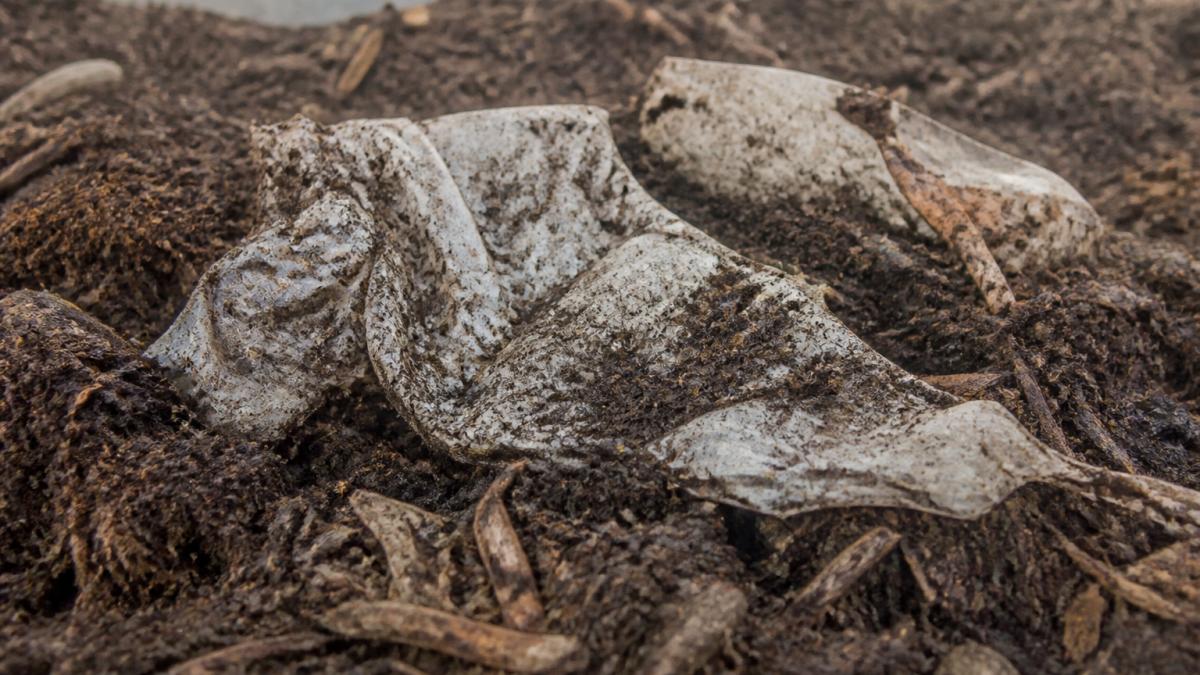
Home composting, the pile in your backyard, rarely reaches the temperatures needed for reliable breakdown. PLA and PHA films may partially degrade in a hot home compost pile, but they often persist as fragments rather than fully decomposing. This is why certification matters: a bag certified for industrial composting may not actually break down in your home compost system, even though it's technically "compostable."
Home Compostable Coffee Packaging: What Actually Works
Home compostable packaging exists, but it's rare in the coffee industry. Most bags labelled "compostable" are certified only for industrial facilities. True home compostable materials break down at lower temperatures (around 20°C) and in less-controlled conditions, which means they need to be made from materials that degrade more readily.
Paper-only bags with no plastic lining genuinely compost at home. They're less common for coffee because they offer poor oxygen barriers; your beans go stale within weeks. Some specialty roasters use these for single-origin lots meant for immediate consumption, accepting the freshness trade-off as acceptable.
The practical reality: if you want to compost your coffee bag at home, you have two options. First, use a paper-only bag and accept shorter shelf life. Second, use a bag certified for industrial composting but find a facility that accepts it; don't assume home composting will work. Many home composters report that compostable bags still contain visible plastic fragments after a year in the pile.
This is where Garage Roasters' approach addresses a real problem. We use fully compostable packaging that works in industrial facilities, and we provide clear disposal instructions so you know where it actually breaks down.
Commercially Compostable Packaging and Industrial Facilities
Industrial composting facilities are the intended destination for most compostable coffee bags. These facilities operate at large scale, managing thousands of tonnes of organic waste annually. They maintain precise temperature, moisture, and aeration controls that accelerate decomposition far beyond what home systems can achieve.
The composting process in commercial facilities typically follows a windrow system. Organic waste, including your compostable coffee bags, gets piled into long rows that are regularly turned to introduce oxygen. Temperatures climb to 55-65°C, creating an environment where microbes rapidly break down organic materials. After 12 weeks, the material has transformed into humus-like compost that's sold as a soil amendment or used in landscaping.
The challenge is access. Industrial composting infrastructure remains unevenly distributed. Major cities typically have facilities, but rural areas often lack them. You need to know whether your local facility accepts compostable coffee bags specifically; some facilities exclude packaging materials, others accept only food-soiled bags, and policies vary significantly by region.
Research from Australian Compost Standards shows that certified compostable packaging breaks down reliably in approved facilities. But the certification only guarantees breakdown under industrial conditions. If your nearest facility is more than an hour away or doesn't accept packaging, the compostable bag becomes impractical regardless of its material composition.
Coffee Bag Recycling and End-of-Life Disposal
Recycling a traditional coffee bag, typically kraft paper with a plastic or aluminium lining, presents a real problem. The paper and plastic are bonded together, making them difficult to separate in standard recycling streams. Most facilities either reject laminated bags entirely or send them to landfill because the mixed materials can't be efficiently processed.
Purchase Garage Roasters coffee here! →
Some roasters now produce bags with separable components: a paper exterior that recycles normally, and a plastic valve or lining that can be removed and recycled separately. This requires consumer action; you must actually separate the components. Many people don't, so the bags end up in landfill anyway.
The end-of-life disposal instructions matter more than the packaging material itself. A bag that says "recycle" but ends up in landfill is no better than a bag designed for landfill. A bag that says "compost" but requires an industrial facility you don't have access to creates a false sense of sustainability.
At Garage Roasters, we include clear disposal instructions with every order. Our compostable bags are certified for industrial facilities, and we direct you to find your nearest facility through Australian Compost Standards locator. If industrial composting isn't available where you live, we acknowledge that and suggest the most practical alternative.
Certification, Standards, and How to Verify Claims
Compostability certification provides a technical guarantee that packaging will break down under specific conditions. The main standards are AS 5810 (Australian home compostable) and AS 5338 (Australian industrial compostable), which align with international standards like EN 13432 and ASTM D6400. These require that materials break down to at least 90% within 180 days under industrial composting conditions.
A bag certified to AS 5338 or AS 5810 will genuinely compost in an approved industrial or home facility, respectively. The certification isn't marketing; it's a measurable, tested claim. However, the certification says nothing about whether your local composting facility exists or accepts the bag.
The problem arises when manufacturers use vague language like "compostable" or "eco-friendly" without certification. These claims are unverified and often misleading. A bag labelled "compostable" without certification may or may not break down reliably.
How to verify a claim: look for a certification logo on the bag. Legitimate certifications display the standard (AS 5810, AS 5338, EN 13432, or equivalent) and the certifying body. If you see only the word "compostable" with no logo or standard referenced, treat it with scepticism.
The Australian Composting Standards provides guidance on what certifications are valid in local composting facilities. Before buying coffee in compostable bags, check whether the certification your chosen brand uses is actually accepted by facilities near you. A certified bag is only sustainable if you can actually use it.
Coffee Freshness and Packaging Performance Trade-offs
Here's the tension that defines compostable coffee packaging: the barrier properties that keep coffee fresh conflict with the materials that compost reliably. Conventional plastic and aluminium excel at blocking oxygen and moisture.
The practical impact depends on storage conditions and how quickly you drink the coffee. A compostable bag stored in a cool, dark place will keep beans fresh for 4-6 weeks. A conventional bag might stretch to 8-10 weeks.
The freshness question also depends on the roast date and how the bag is sealed.
At Garage Roasters, we've tested our compostable packaging extensively. Our beans maintain consistency and stability throughout their shelf life because we focus on roasting precision and proper packaging design. The compostable lining performs as well as conventional options for the typical consumption timeline of our customers.
The trade-off is real but manageable: you gain genuine end-of-life compostability and reduce landfill impact, while accepting a modest reduction in maximum shelf life. For most coffee drinkers, this is a worthwhile exchange.
The sustainability of compostable coffee packaging depends entirely on what actually happens after you brew your last cup. Material choice matters, but infrastructure access matters more. A compostable bag is genuinely sustainable only if industrial composting is available where you live and you actually use it.
Frequently Asked Questions
Is compostable coffee packaging actually sustainable?
Compostable coffee packaging reduces landfill waste and microplastics if disposed of correctly, but sustainability depends on three factors: whether it reaches an industrial composting facility (most home bins won't reach the required temperature), the energy used in manufacturing, and whether the facility exists in your area. Many compostable bags still end up in landfills, where they don't decompose. True sustainability requires both certified compostable packaging AND access to proper composting infrastructure.
Can compostable coffee bags go in a home compost bin?
Most commercial compostable coffee bags cannot break down in home compost because they require temperatures above 58°C sustained for weeks, which home systems rarely achieve. Look for bags certified as 'home compostable' (certified to AS 5810 or equivalent European standard). Even then, decomposition takes 6-12 months. If your bag isn't specifically labelled home compostable, place it in industrial composting facilities instead.
What is the difference between compostable and biodegradable coffee packaging?
Biodegradable means a material will break down eventually, but offers no timeline or conditions; it could take decades in landfill and leave toxic residues. Compostable is certified to break down completely within a set timeframe (typically 180 days) into non-toxic compost under specific conditions. Compostable is a measurable standard; biodegradable is vague marketing. Always choose certified compostable packaging if environmental impact matters to you.
How can you check whether coffee packaging is certified compostable?
Look for certification logos on the bag: AS 5338 (Australian industrial compostable standard), AS 5810 (home compostable), or European equivalents (EN 13432, EN 14995). Verify the logo is genuine by checking the certifier's website. Bags labelled 'compostable' without a certification mark are not verified. Contact the roaster directly if you're unsure.