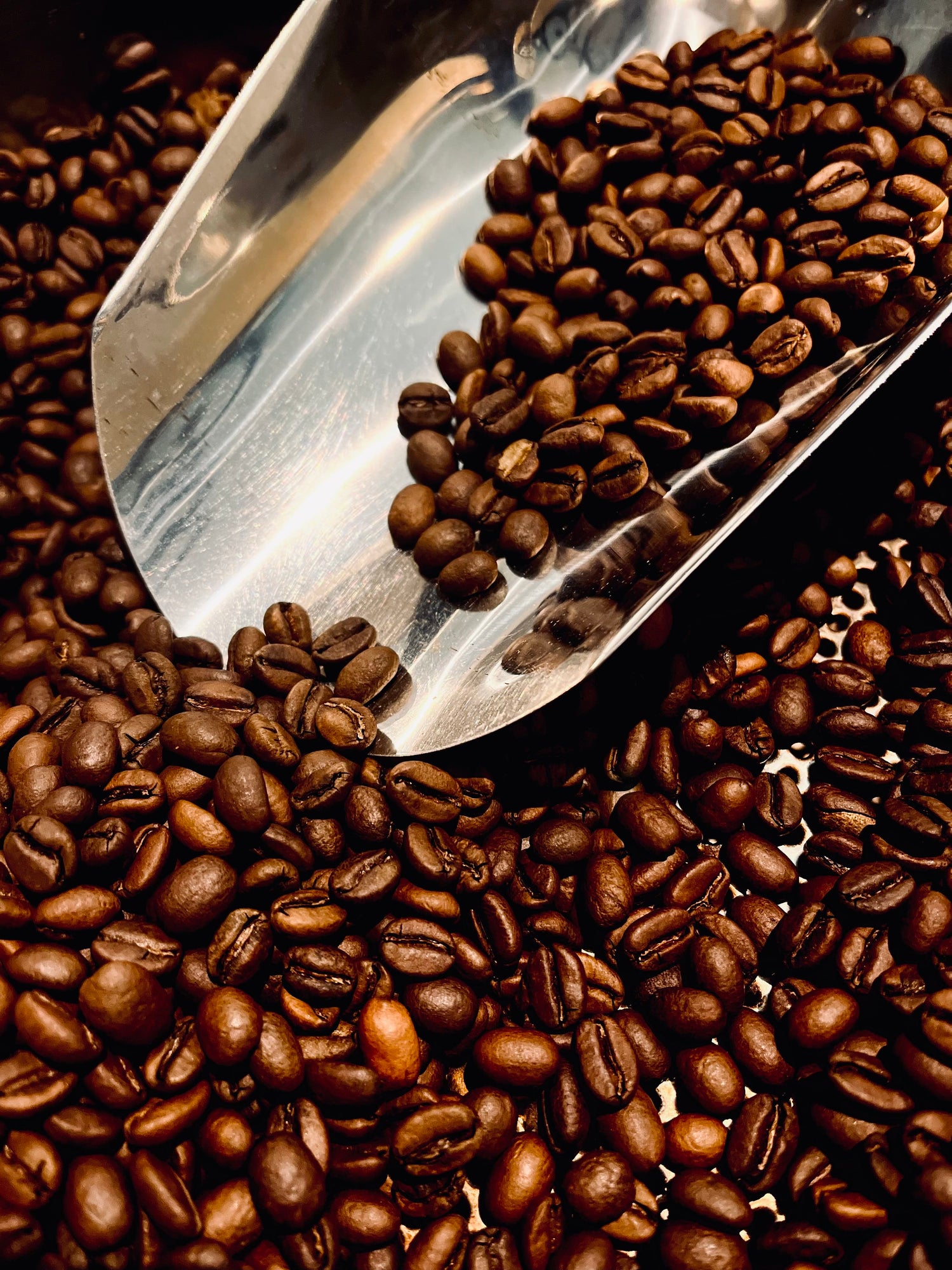


After trialling five different pour over roast profiles for the Costa Rica Volcan Azul Geisha, we've settled on a specific profile which highlights the florality and delicacy of this amazing varietal to launch our first ever limited edition pour over roast...
For those of you who have been long-term readers of this newsletter, you'll know that I'm a huge fan of pour over as a way to enjoy coffee. Pour over emphasises the flavour notes which I find most exciting in coffee, the process doesn't require much in the way of equipment (although the quality of said equipment is incredibly important... with the grinder being the most important component), and it's extremely economical!
We've been considering introducing a limited edition pour over roast and have decided to do so with the most sought after coffee varietal globally, sourced the amazing Finca Volcán Azul a renowned, historic coffee estate in Costa Rica, managed by Alejo Castro Kahle, a sixth generation producer. Located on the fertile slopes of the Poás and Barva Volcanoes in the West Valley, it produces high-altitude specialty coffees—including Gesha, Catuai, and SL-28—often using anaerobic, honey, and natural processes.
The story of Geisha is interesting...
Geisha's lineage runs back further than most specialty coffee origin stories — to 1936, and to seeds collected by a British consular official named Whalley, stationed in Ethiopia's Bench Maji region. His brief was straightforward enough on paper: gather around ten pounds of coffee seed from the forests near Gesha Mountain, contributing to a wider survey of Ethiopian wild coffee varieties commissioned by Kenya's Director of Agriculture.
The survey itself was a colonial-era exercise in agricultural prospecting. Ethiopia's highland forests are coffee's ancestral home, and the British wanted to know which of the hundreds of regional accessions growing wild there might be worth propagating across other African holdings. Even then, local traders had a reputation for the coffees coming out of the Gesha area.
How "Gesha" — or "Gecha," depending on the transcription — became "Geisha" is a question nobody has cleanly answered. What's clear is that the spelling on Whalley's collection notes is what travelled with the seeds as they moved on: first to Tanzania, then to Costa Rica, passing through the network of gene banks and research stations that quietly shuttle genetic material between coffee-producing countries. They eventually landed at CATIE in Costa Rica, and from there to Hacienda La Esmeralda in Panama which eventually made this the varietal the most sought after and expensive coffee in the world.
You can purchase our limited edition Geisha pour over here.
To read about latte art click here
To learn about coffee bags click here
To hear about coffee produced by Guatemalan women click here